













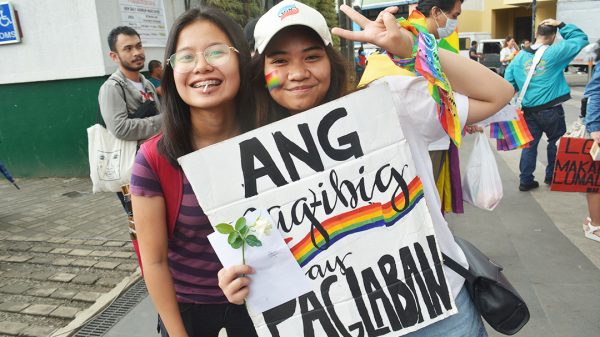






Adults from Generation Z are far likelier to identify as lesbian, gay, bisexual or trans (LGBT) than older people.
This is according to a Gallup poll, which found that an estimated 5.6% of adults (at least in the US) identify as LGBT. This is 4.5% higher from Gallup’s last data-gathering in 2017.
The results were compiled from more than 15,000 interviews conducted throughout 2020 with people aged 18 and up.
To be specific, for Gen Zers (those born between 1997 and 2002), 1 in 6 – or roughly 16% of respondents – identified as as LGBT. Comparatively, only 9% of Millennials and 3.8% of Gen Xers identify as LGBT. Just 1.3% of those born before 1946 and 2% of Baby Boomers identified similarly.
Aside from the pronounced generational differences, significant gender differences were seen in sexual identity, as well as differences by people’s political ideology.
Specifically:
- Women were more likely than men to identify as LGBT (6.4% vs. 4.9%, respectively).
- Women were more likely to identify as bisexual – 4.3% do, with 1.3% identifying as lesbian and 1.3% as something else. Among men, 2.5% identify as gay, 1.8% as bisexual and 0.6% as something else.
13.0% of political liberals, 4.4% of moderates and 2.3% of conservatives say they are lesbian, gay, bisexual or transgender. - Differences are somewhat less pronounced by party identification than by ideology, with 8.8% of Democrats, 6.5% of independents and 1.7% of Republicans identifying as LGBT.
- Education-wise, there were no meaningful educational differences, with 5.6% of college graduates and 5.7% of college non-graduates identifying as LGBT.
Gallup is uncertain whether the higher LGBT identification “reflects a true shift in sexual orientation” or “a greater willingness of young people to identify as LGBT.”
Breaking down the identification of those who claim to belong under the LGBT banner, more than half of LGBT adults (54.6%) identified as bisexual. About a quarter (24.5%) said they are gay, 11.7% identified as lesbian, and 11.3% as transgender. An additional 3.3% used other non-heterosexual preference or term to describe their sexual orientation, such as queer or same-gender-loving.