














CEBU CITY – Deaf Filipinos are already at a disadvantage when accessing sexual and reproductive health and rights (SRHR), but when they have another minority identity on top of being PWD – for instance, for also being LGBTQIA+ – then the difficulties they encounter more than double.
This is why, according to Aaron Moises Bonete, co-executive director of Bahaghari Center for SOGIE Research, Education and Advocacy, Inc. (Bahaghari Center), there is a need to “not just recognize that people have multiple identities, but also to make sure that this is included in SRHR service delivery.”
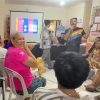
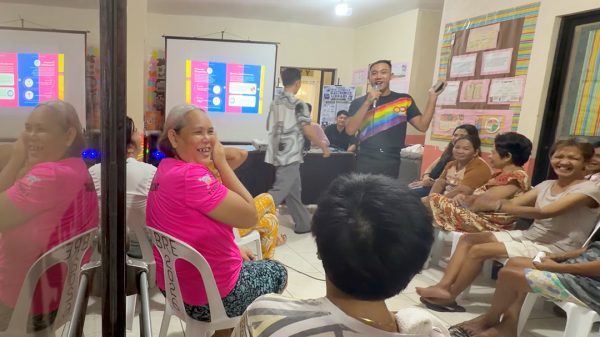
Bahaghari Center rolled out “Saving Hands” in Cebu City, part of its effort to tap Deaf LGBTQIA+ communities all over the country to capture their lived experiences related to SRHR, and then co-create solutions to SRHR issues that befall them.
“We focus on participatory approaches,” Bonete said, “to guarantee that the voices of those at the fringes of society, such as Deaf LGBTQIA+ people, are included in solution-identification and implementation.”
Mx Disney Aguila, co-executive director of Bahaghari Center, added that there is a need to “go beyond token representation”. “Deaf LGBTQIA+ Filipinos can help deal with SRHR issues if/when given the chance. So we engage them.”


The discussions with Deaf LGBTQIA+ Filipinos were facilitated by Michael David dela Cruz Tan, MDC, founder of Bahaghari Center and editor in chief of Outrage Magazine, the only publication exclusively for the LGBTQIA+ community in the Philippines.
#SavingHands is supported by Mujer-LGBT Organization.