
























Amar Sangha, MSM
Founder, Sher Pride
Delta, British Columbia, Canada
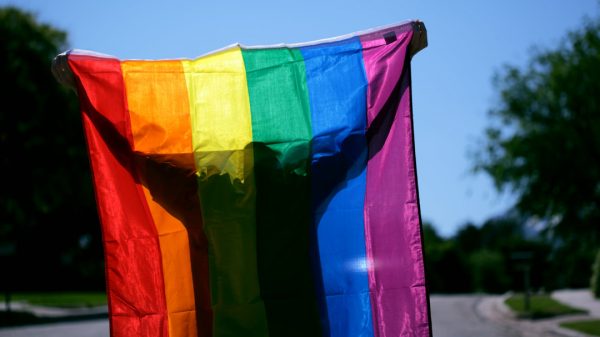
Every June, rainbow flags appear in storefronts, workplaces, schools, community centres, and public spaces across Canada. Some people may wonder whether Pride Month is still necessary in a country where same-sex marriage is legal and discrimination based on sexual orientation is prohibited.
The answer is an unequivocal yes.
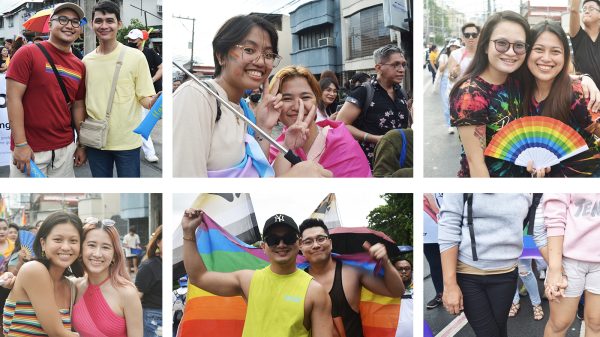
Pride is not simply a celebration, a parade, or a marketing campaign. It is a public declaration that 2SLGBTQI+ people have the right to live openly, safely, and authentically. It reminds us that human dignity is not something granted by the majority. It belongs equally to every person.
We must never confuse legal progress with complete equality. A person may possess rights on paper while still facing bullying at school, rejection at home, discrimination at work, harassment in public, or isolation within their cultural or religious community. Transgender, non-binary, and gender-diverse people, queer youth, newcomers, refugees, racialized people, people with disabilities, and those living in smaller or more conservative communities can face multiple and intersecting forms of exclusion.
Pride Month tells a frightened young person that they are not broken. It tells parents that loving their child is more important than protecting themselves from gossip, shame, or prejudice. It tells employers, educators, governments, religious institutions, and community leaders that silence in the face of discrimination is not neutrality. Silence allows discrimination to continue.
The importance of Pride becomes even clearer when we look beyond Canada.
Around the world, millions of lesbian, gay, bisexual, transgender, queer, and intersex people remain unable to live freely or safely. According to the Human Dignity Trust, 65 jurisdictions still criminalize private, consensual same-sex intimacy. In some countries, people may face years or even life in prison simply because of whom they love. In 12 countries, the death penalty is either imposed or remains a legal possibility for consensual same-sex activity.
These are not abstract laws confined to legal documents. Criminalization creates a climate in which queer and transgender people can be arrested, blackmailed, extorted, assaulted, dismissed from employment, denied housing, rejected by their families, or prevented from accessing health care. Even when the harshest penalties are not regularly enforced, their existence tells an entire population that their lives and relationships are considered criminal.
In some countries, governments restrict not only same-sex relationships, but also freedom of expression, freedom of association, Pride events, community organizations, gender expression, and public advocacy for equality. Human rights defenders may be threatened or imprisoned. Queer people may be forced to conceal their identities, enter unwanted marriages, flee their homes, or seek refuge in other countries.
It is also important to understand that many laws used to persecute queer people are remnants of colonial legal systems imposed by European powers. They are sometimes defended today as expressions of national culture or tradition, even though their origins can be traced to foreign colonial rule.
For people living under these conditions, Pride is not a party. Pride is an act of courage. It is the demand to be recognized as human in societies where visibility can lead to imprisonment, violence, or death.
Canada therefore has a responsibility not only to celebrate the freedoms achieved here, but also to defend human rights internationally, protect people fleeing persecution, support human rights advocates, and challenge governments that criminalize people for their sexual orientation or gender identity.
Pride also reminds newcomers and refugees who have escaped persecution that they are entitled to safety and belonging in Canada. Many arrive carrying years of fear, secrecy, family rejection, or trauma. Seeing a rainbow flag at a school, hospital, library, workplace, or community centre can communicate something profoundly important: you are not a criminal, you are not alone, and your life has value.
At the same time, we cannot assume that progress in Canada is permanent. Rights that took generations to secure can be weakened when prejudice is normalized, vulnerable communities are used as political targets, or misinformation is allowed to replace compassion and reason.
Visibility therefore remains both courageous and necessary.
Pride belongs to more than the 2SLGBTQI+ community. It belongs to every parent who embraces their child, every teacher who stops bullying, every faith leader who chooses compassion, every employer who creates a safe workplace, and every friend who refuses to laugh at a hateful joke.
Human rights endure when people beyond the group directly affected are willing to defend them.
We must continue building strong bridges with families, friends, neighbours, cultural communities, and allies. Queer equality will not be secured through isolation. It will be strengthened through connection, education, empathy, and shared humanity. When people know us personally, work beside us, hear our stories, and recognize our common hopes, they are more likely to stand with us when our rights are challenged.
Pride should also call us to practise solidarity with every community targeted by hatred. Homophobia, transphobia, racism, sexism, ableism, religious intolerance, and xenophobia frequently grow from the same dangerous belief that some people are less worthy than others. We cannot demand dignity for ourselves while ignoring the dignity of our neighbours.
Pride Month is not about requiring everyone to think alike. It is about insisting that personal or religious disagreement can never justify humiliation, exclusion, harassment, imprisonment, or violence. Freedom of belief must coexist with the equal right of every person to participate in public life without fear.
Pride honours those who resisted when being visible could cost them their families, careers, freedom, and lives. It celebrates the progress their courage made possible. Most importantly, it reminds us that this progress can never be taken for granted.
Until every person can walk through their school, workplace, neighbourhood, cultural community, and place of worship without hiding who they are, Pride will remain necessary.
Until no person anywhere in the world can be imprisoned or sentenced to death because of whom they love, Pride will remain necessary.
This June, let us do more than display a rainbow. Let us defend the human being represented by it.