






















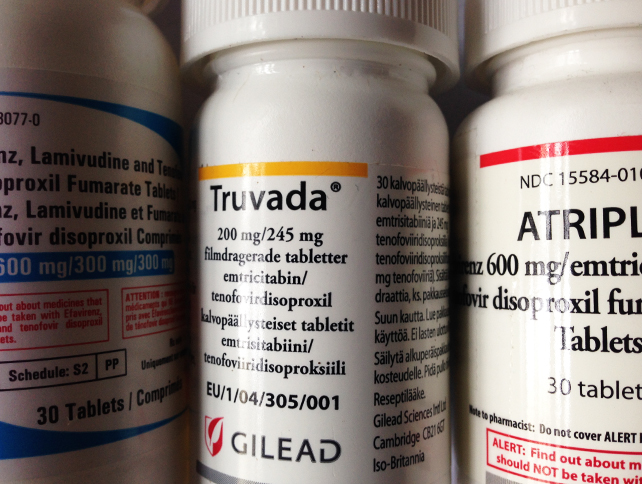
A new study has shown that barriers preventing men who have sex with men (MSM) from establishing nonjudgmental relationships with primary care providers may limit access to preexposure prophylaxis (PrEP) to prevent HIV infection.
Improved patient-provider communication would allow for more open discussion about sexual behaviors, health risks, and preventive interventions, according to an article published in LGBT Health, a peer-reviewed journal from Mary Ann Liebert, Inc., publishers. The article is available on the LGBT Health website until October 12.
The article entitled “Culturally Competent Sexual Healthcare as a Prerequisite for Obtaining Preexposure Prophylaxis: Findings from a Qualitative Study” was coauthored by Kevin Maloney, MPH, Beth Israel Deaconess Medical Center (Boston, MA) and Emory University (Atlanta, GA), and colleagues from Fenway Health and Harvard Medical School (Boston), Pennsylvania State University (University Park), and Online Buddies, Inc. (Cambridge, MA). The researchers conducted online focus groups with a geographically diverse sample of MSM and asked participants how their discomfort in healthcare settings affected PrEP utilization. They emphasized that improved communication about sexual orientation and behaviors is especially important for MSM who do not have access to LGBT-specialized providers.
“Despite recent emphasis on the importance of creating a clinical atmosphere conducive to disclosing sexual orientation, taking a sexual history, and assessing HIV risk, this study suggests that primary care providers’ failure to do so remains a barrier to HIV prevention,” says LGBT Health Editor-in-Chief William Byne, MD, PhD, Icahn School of Medicine at Mount Sinai, New York, NY.