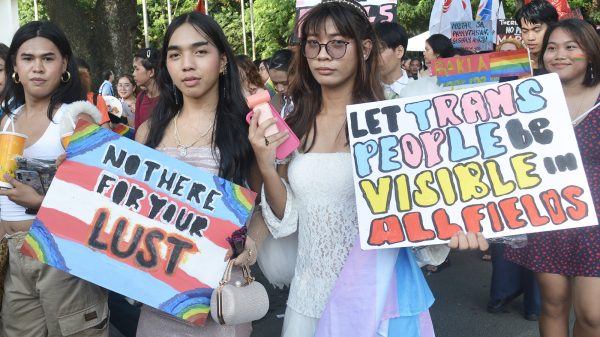



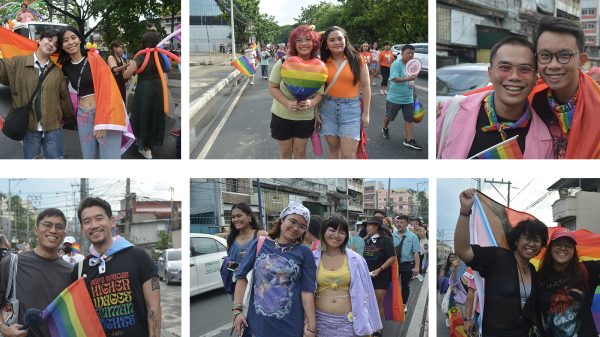





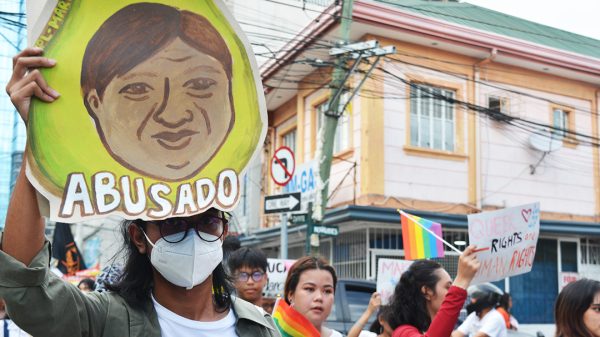









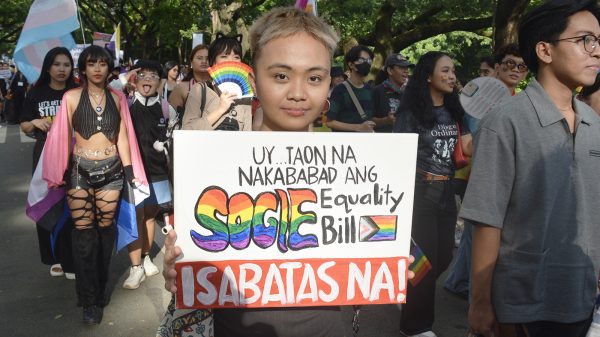











In the House of Representatives (HOR), House Bill No. 12060 (the Simplified Legal Gender Recognition Act) was filed to “establish a respectful, quick, accessible, and rights-based process through which transgender, nonbinary, and gender-diverse individuals can legally update their names and gender markers based on their self-determined gender”.
In a statement, pioneering trans organization Society of Trans Women of the Philippines (STRAP) noted that even now, and even if “every transgender, nonbinary, and gender-diverse Filipino deserves to have their identity recognized, respected, and protected by law”, still many trans Filipinos are hindered by the “inability to update their names and gender markers in official documents.”
For STRAP, this “remains a persistent barrier to dignity, equality, and meaningful participation in everyday life. From accessing education, employment, healthcare, and government services to simply presenting identification documents, transgender Filipinos continue to encounter discrimination, humiliation, and unnecessary bureaucratic obstacles because their legal documents do not reflect who they are.”
Under the proposed bill, applicants may pursue either a straightforward administrative process through their Local Civil Registry Office (LCRO) or a streamlined court petition. Neither route requires a formal trial or adversarial hearing. Applicants need only submit a sworn statement affirming their gender identity, and they will not be required to undergo or present proof of gender-affirming surgery, hormone therapy, or psychiatric evaluations.
Importantly, the bill recognizes that gender is not limited to a male-female binary. It provides for the recognition of nonbinary and other gender-diverse identities, including the option of a gender marker such as “X.”
It also extends access to minors with the consent of a parent or legal guardian and provides for the recognition of legal gender changes obtained in other countries.
Beyond simplifying the recognition process, the bill establishes safeguards for the dignity and privacy of applicants. It requires the confidentiality of an individual’s gender history and sex assigned at birth, and obliges government agencies and private entities to recognize and accept updated legal documents. It likewise mandates gender sensitivity training for judges, civil registrars, and other officials involved in implementing the law.
“These provisions are not special privileges. They are necessary protections that bring our laws closer to the realities and human rights of transgender and gender-diverse Filipinos,” STRAP stated.
For STRAP, the urgency of passing this legislation “cannot be overstated”.
“Across the world, movements organized under the banners of conservatism, ‘Pro-Life’, ‘Pro-Family’, and religious belief are increasingly mobilizing against gender diversity, inclusivity, reproductive and sexual health rights, and transgender rights. In the Philippines, we are likewise witnessing the growing circulation of anti-gender rhetoric and disinformation designed to undermine public understanding of gender diversity and discredit the work of human rights advocates. These campaigns threaten not only the advancement of legal protections but also the safety, dignity, and lives of transgender people.”
“At a time when our rights are being questioned and our identities are being targeted, the passage of the LGR Bill is an urgent affirmation that transgender Filipinos are entitled to equal recognition, protection, and treatment under the law.”
The bill was introduced by Reps. Sarah Jane I. Elago, Renee Louise M. Co, and Antonio L. Tinio, alongside community advocates including the STRAP, Transmasculine Philippines, Pioneer Filipino Transgender Men Movement (PFTM), and Bahaghari.