
















By the end of 2025, it was estimated that there were 252,800 people living with HIV in the Philippines. From July to September 2025, there were 5,583 new HIV cases, which was 22% higher than the number of cases for the same quarter in 2024.
To date, the country has 61 new HIV cases per day. Ninety-five percent (95%) of them are males, with 30% from the 15-24-year-old age group, and 42% from the 25-34-year-old age group.
Sadly, only 67% of the diagnosed are taking life-saving antiretroviral medications. So that – not surprisingly – from July to September 2025 alone, at least 125 people living with HIV reportedly died. HIV, in this sense, is still a death sentence in the Philippines.
But here is an interesting fact: there is actually a new medicine that can prevent HIV infection. Called lenacapavir, this is a new type of HIV pre-exposure prophylaxis (or PrEP) that only needs to be injected twice a year to provide protection against HIV.
The questions that have to be asked include: When it will see the shores of the Philippines… if at all, and what steps are being taken to make its use by Filipinos a reality.
Lenacapavir as an option
According to Rogeselle Burdeos Monton, program manager at Tropical Disease Foundation, Inc., it is not possible to deny the current state of HIV responses in the Philippines.
“This is important for countries in order for them to expand the HIV prevention options among individuals who have different needs, most especially the hard-to-reach individuals who are high-risk,” Monton said in Filipino and English.
He added that, for him, the challenge is in making lenicapavir widely available. “Will this be made available in the market, available for buying? Or will this be solely available via the Department of Health (DOH), and if so, how will they sustain this?”
Issues with oral PrEP roll-out
Before the arrival of lenacapavir, the country actually already has oral PrEP, which prevents HIV infection by 99%. But – this is worth highlighting – this was only rolled out in the Philippines in 2021, so that to date, only 72,264 people use oral PrEP. Majority of these users, or 81% of the total, are from NCR, CLABARZON and Central Luzon.
Part of the issue is the continuing lack of knowledge and awareness about PrEP, according to Dr. Ma. Tarcela Gler of Makati Medical Center. “The PrEP knowledge of young people is just 30%, which is very low. So probably if the government can (better) the awareness, it should be the community that needs to increase the awareness. We need to do things to make sure people are aware of PrEP, and we create a demand.”
There are other must-know PrEP-related figures: in 2025, only 38% of PrEP enrollees returned for a refill; and among those who did not return, 5% tested positive for HIV. So even with oral PrEP, the government and existing HIV-centric non-government organizations are already not exactly effective.
“Of course we’re not denying the current challenges related to oral PrEP, most specially with the supply chain and access,” Monton said, adding that not all places in the country can access PrEP.”
DOH and HIV-centric NGOs need to step up
As FYI: In the US, the price of lenacapavir for HIV treatment in the US was pegged at $28,000 per person per year. But in September 2025, UNAIDS announced agreements crafted with generic producers to bring the price to just $40 per person per year.
The supply chain, stressed Monton, is going to be a deal-breaker/maker in a lenacapavir roll-out in the Philippines.
“It will be best if the need for this will (encourage) policy support from the government. It should have a strong stand on this. If we will be offering another option to the Filipino people, of course we need to make it sustainable. How do we make it sustainable? Of course we finance it. How we do finance it? Will it be a burden, one that will be imposed on PhilHealth, or do we make it available in the market?” Monton said.
But he added that “we also need to consider equity. Will it be available for everyone?’
Focus: Combo of best practices
For Dr. Gler, the responses still need to be a combination of best practices.
There are various steps necessary to decrease the HIV rates in the country, Dr. Gler said. “One: early testing and treatment have a public health impact because U=U. Two: PrEP for people who have several sexual partners, and whose partners are not undetectable. And of course there’s the ‘vaccine’, which should be coming. It’s a combination of all these. It’s not just one intervention.”
“It’s not bad for us to consider other options in the continuum of care that we deliver to our beneficiaries, our patients, our clients. But considering the supply chain issues, especially in financing, I think the DOH has to step up. Start with policy reforms, strengthen the systems. Hopefully the supply chain is improved,” Monton said.
As FYI: To get the government’s plan on introducing lenacapavir in the Philippines, Outrage Magazine reached out to the Philippine National AIDS Council in December 2024. They endorsed the publication to the Disease Prevention and Control Bureau of the Department of Health on January 8, 2025. They, then, passed the publication to the HIV/AIDS and TB Programs Control Division on January 10, 2025. Nothing was heard from any of these offices since then.
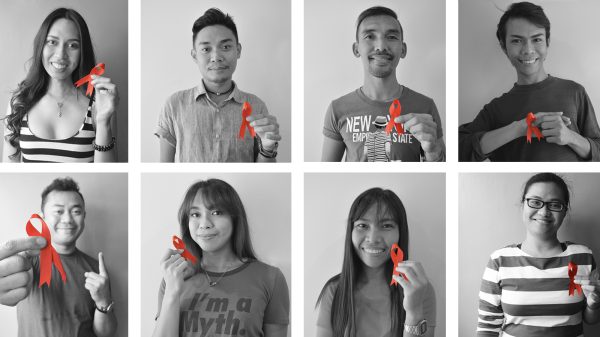
This is part of “More than a Number”, which Outrage Magazine launched on March 1, 2013 to give a human face to those infected and affected by the Human Immunodeficiency Virus (HIV) and Acquired Immunodeficiency Syndrome (AIDS) in the Philippines, what it considers as “an attempt to tell the stories of those whose lives have been touched by HIV and AIDS”.
More information about (or – for that matter – to be included in) “More than a Number”, email editor@outragemag.com, or call (+63) 9287854244 and (+63) 9157972229.