









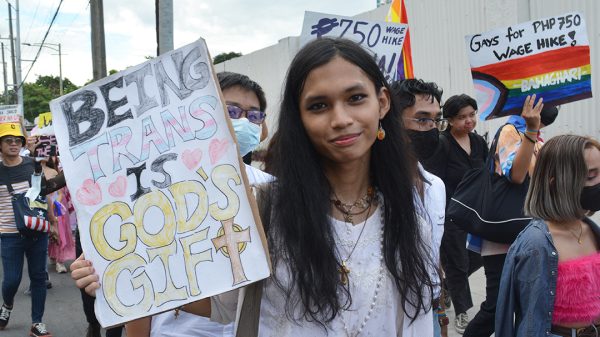






















During puberty, all kinds of hormonal changes take place in the body, which lead to the development of external sexual characteristics, such as breast growth, a lower voice or body hair growth. For transgender young people, who do not identify with the gender assigned to them at birth, these are often undesirable changes, which can be very drastic. Puberty blockers can temporarily halt these developments and give young people time to explore their gender identity.
Although puberty blockers have been proven to contribute to the mental well-being of transgender young people, little is known about the influence of puberty blockers on sexual satisfaction and sexual problems later in life.
Researchers from Amsterdam UMC presented 70 transgender adults with questionnaires. All participants started with puberty blockers and then received gender-affirming hormones. The participants completed the questionnaire about sexual experiences, satisfaction, and possible sexual problems on average 14 years after the start of their treatment.
Isabelle van der Meulen, researcher at Amsterdam UMC, explained: “Our results show that more than half of trans men and 40% of trans women are satisfied with their sex lives. This corresponds to the sexual satisfaction of the cisgender population. There was also no difference between people who started puberty blockers early or later in puberty.”
The key findings included:
- Most participants had no trouble with desire, arousal or having an orgasm.
- Of the sexual problems that were mentioned, difficulty taking initiative was the most common problem among trans men, while reaching orgasm was the most frequently mentioned among trans women.
- Most participants indicated that these problems were only experienced as stressful to a limited extent.
- The frequency of sexual problems was consistent with previous studies among transgender adults who did not start hormone therapy until adulthood.
These results provide important insights for healthcare providers in the guidance of transgender youth and can reduce concerns about sexual functioning later in life. Van der Meulen emphasised: “With these results, we can better inform young people when starting puberty blockers about what they can expect sexually later in life.”
At the same time, the researchers underline that sexual experiences are complex and are influenced by both physical and psychosocial factors.
“For example, seeking and initiating sexual contact was often mentioned as a problem, something that is not directly related to the physical effects of hormone therapy. That is why it is important to pay attention to the psychosocial aspects of sexuality in the counseling,” Van der Meulen ended.