



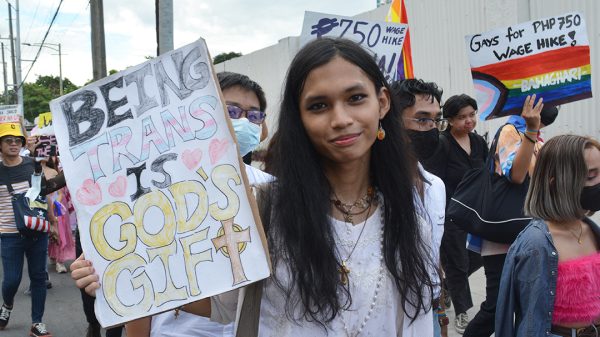







Over 80% of transgender, nonbinary and genderqueer people prefer online dating because they consider this as safer.
This is according to a report, The State of Dating Vol 2: Building Safer Intimacy Through Inclusivity, by Feeld x Dr. Apryl Williams, author of Not My Type: Automating Sexual Racism in Online Dating.
Released by Feeld dating app, the report explored how digital platforms can create safer, more inclusive environments for connection, especially for minoritized communities, to foster trust and authenticity in an era where digital intimacy is intrinsic in people’s daily lives.
Drawing from a survey of over 6,000 respondents across the US, UK, and Netherlands — conducted in collaboration with research consultancy Censuswide — along with insights from nearly 3,000 Feeld members, the report examined how digital spaces can inspire respectful, transparent and consensual behavior between people. It also highlighted the “unique opportunities and challenges of navigating a world that embraces both online and in-person intimacy”.
Key findings
Online safety is a priority for marginalized communities
- Queer daters are 80% more likely to prefer online connections for safety compared to heterosexual daters, according to Censuswide data.
- 83% of trans, nonbinary, and genderqueer respondents prefer online dating over offline, citing safety concerns.
- 66% of trans and gender nonconforming respondents reported seeking connections outside their immediate geographical area to avoid unsafe offline spaces.
Digital intimacy encourages self-expression and exploration, unlocking potential for personal growth
- 34% of Feeld members surveyed feel that connecting on online platforms helps build trust and an increased sense of safety before meeting in person.
- Online Connectedness may offer another pathway to harm reduction: approximately 40% of those surveyed conveyed that digital intimacy platforms facilitate intentional conversations by allowing daters more time to process and respond to new/ unexpected ideas — possibly reducing the kind of hostile exchanges that occur when individuals do not feel they have space to lean in with genuine curiosity and kindness.
- 40% of Feeld members connect online first because they feel safer and more in control than when meeting for the first time in person.
A sense of safety is subjective and enabled via a variety of tools and features
- 58% of surveyed Feeld members highlighted control over personal information as the most important feature for creating safer online dating environments.
- 53% of surveyed Feeld members identified blocking and reporting tools as critical for maintaining their sense of safety and control. This reflects the varied safety needs of Members in digital spaces.
Contextual Analysis
“Online platforms like Feeld demonstrate that when apps are designed with marginalized communities in mind, they not only create inclusive environments but also redefine how safer intimacy can be cultivated in a hybrid world,” said Williams.
Alongside prioritizing safety, Feeld’s focus on purposeful collaboration with its diverse global community helps challenge the uniformity of thought often seen in online spaces.
64% of Feeld survey respondents reported greater openness on Feeld than on other dating sites or in person, and over 30% of non-cis members surveyed were more likely to report feeling more comfortable meeting online compared to cisgender members. This ability to engage thoughtfully in diverse and meaningful exchanges is said to “underscore… Feeld’s role in creating spaces that encourage curiosity, introspection and deeper connections.”
To read the full report and explore the findings in more detail, email feeld@purplepr.com.