





























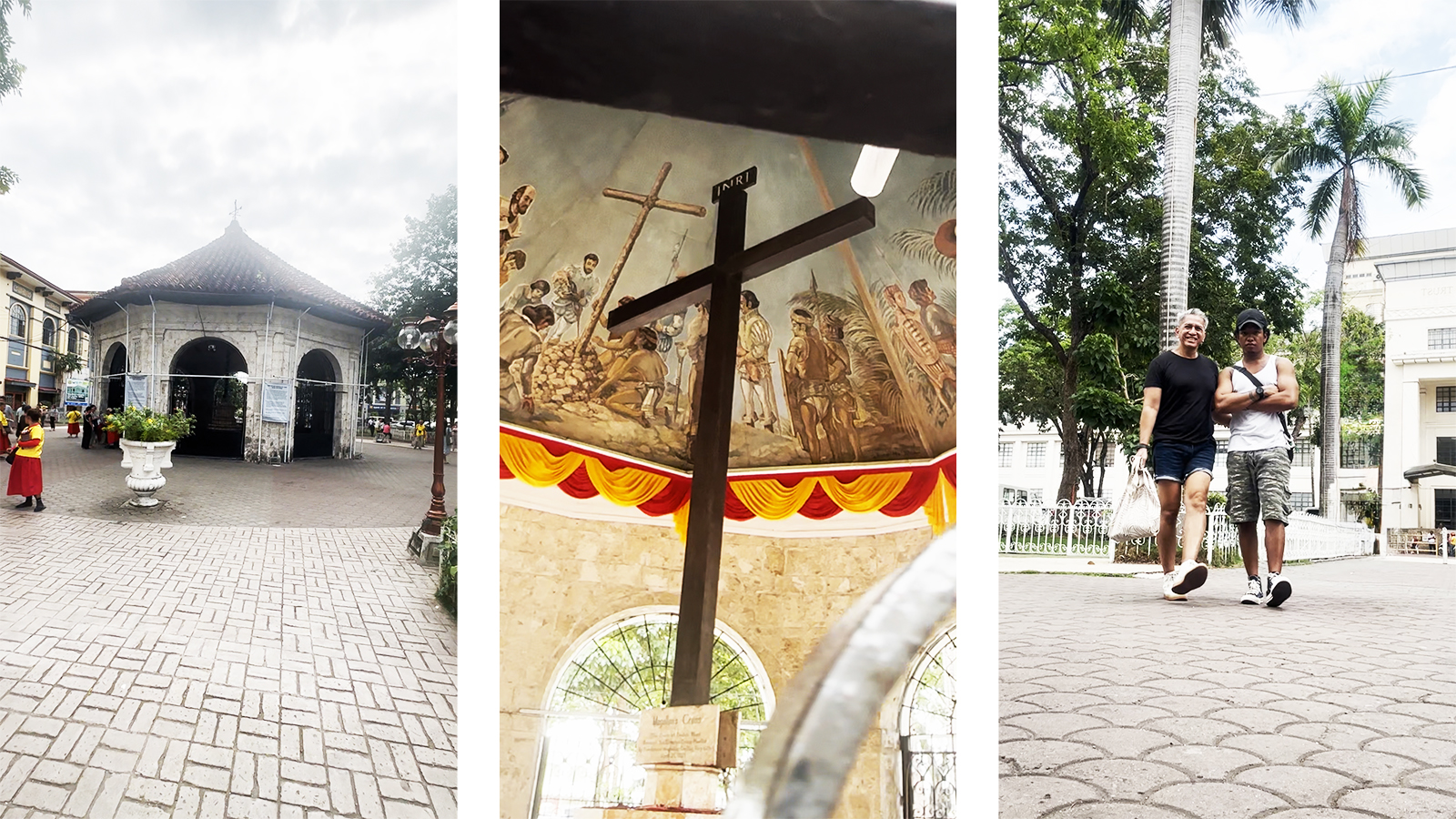
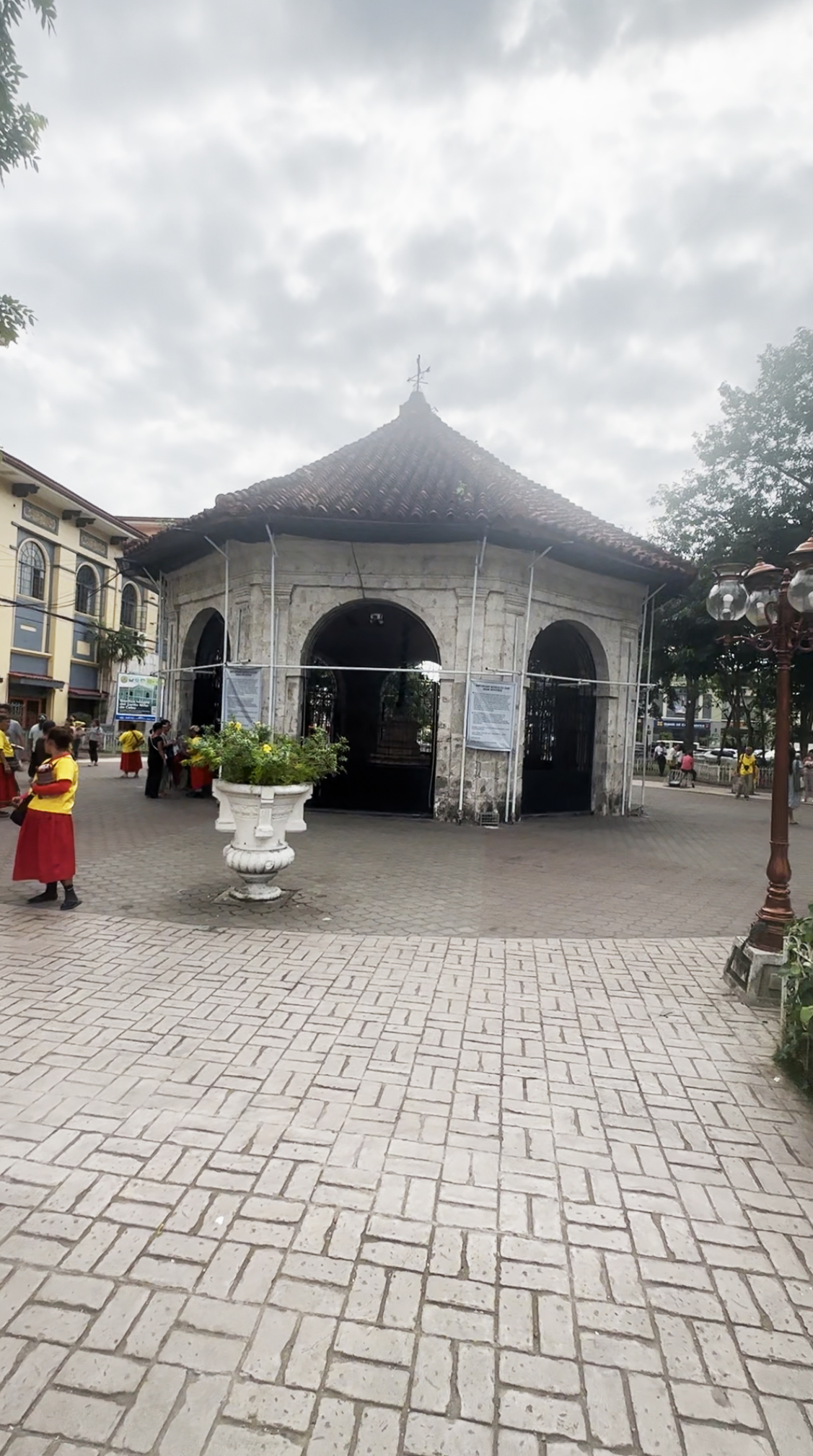
When images related to Cebu are shown, one of these will most likely be the Magellan’s Cross Pavilion. Which makes it a must-check for all who are visiting the city… along with the faithful, of course.
@outragemag Must-check for every #LGBT #tourist in #Cebu: Magellan’s Cross Pavilion, symbolizing Spanish occupation and introduction of #Christianity in the #Philippines ♬ original sound – Outrage Magazine
Una, the religious and pilgrim site is located at Plaza Sugbo, right beside the Basilica del Santo Niño, so it is impossible to miss.
Ikalawa, there is a gazebo, the pavilion, housing Magellan’s Cross. And this is, basically, the entirety of the physical “attraction”. So for those who may be expecting more, temper those expectations.
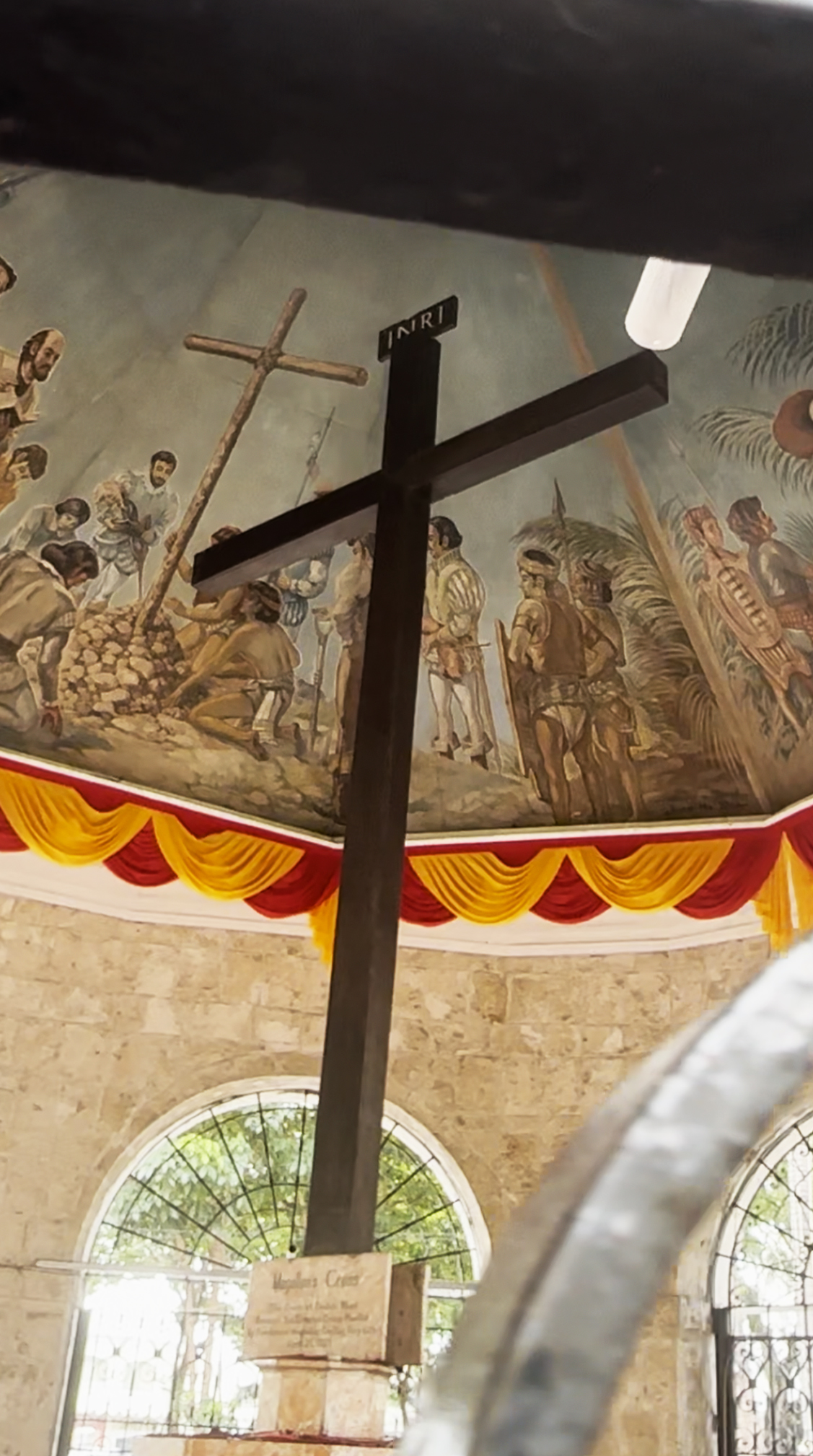
Ikatlo, this spot is said to be where Ferdinand Magellan’s expedition erected a cross in 1521, following the conversion into Catholicism of King Humabon and his queen, son and daughters, along with some 800 of their subjects as they were baptized by Father Pedro Valderrama.
As FYI: this is, for all intents and purposes, not really Magellan’s cross. Instead, the Augustinians of the Legazpi expedition in 1565 put a cross in front of their house, and this was saved on the conflagration in 1566. It was also not called “Magellan’s Cross”, but – instead – as “Cross of the Spaniards” (Cruz de los Españoles) or as “Santa Cruz”.
This site has, obviously, undergone numerous changes – e.g. in 1735, it was improved by Rev. Fr. Juan Albarran, OSA, Prior of San Agustin; and then again in 1834 by Rt. Rev. Santos Gomez Marañon, Bishop of Cebu, who ordered the construction of the present octagonal gazebo made of coral stone and covered with red-tiled tegula roof. It was Marañon who had the cross enclosed.
Ika-apat, as a tourist attraction, the gazebo has must-check elements – e.g. there’s a mural by Jess Roa and Serry M. Josol on the ceiling, depicting the baptism of Rajah Humabon and his household into Catholicism, and the planting of a wooden cross by Ferdinand Magellan.
Ika-lima, the Magellan’s Cross was declared a National Cultural Treasure (NCT) by the National Museum in 2021.
But – ika-anim – you really should consider that this is a religious site – e.g. the cross enjoys espiscopal concessions of indulgences; meaning, here, the diocesan bishop grants partial indulgences.
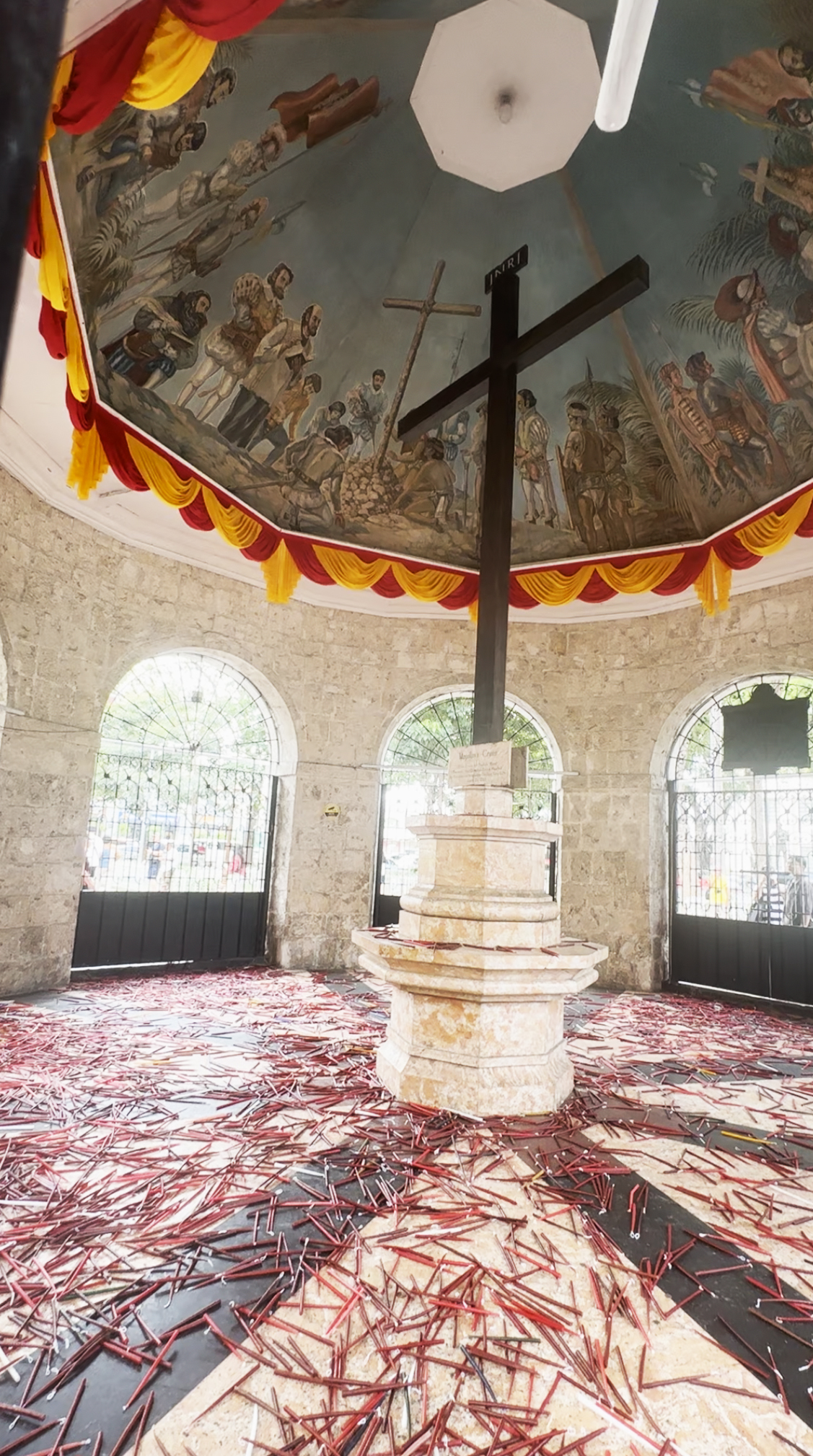
It is the holiness of the site that you’d be reminded of when you visit, as you are approached by locals who – while selling colorful candles – offer their services to you – i.e. they can pray on your behalf. Arthur was worried, mainly because the prayers are in Cebuano or Latin; “I’d like to know what’s being said on my behalf,” he said.
And then off we go again, for more LGBTQIA+ rampa…
The Magellan’s Cross Pavilion is situated on Plaza Sugbo, beside the Basilica del Santo Niño.