





























A comfortable swimsuit makes room for the day ahead, whether that means swimming a few laps, playing with grandchildren, or reading beside the pool. Choosing one with more coverage starts with deciding where that coverage matters and how the suit needs to feel when worn.
Modesty is personal. A higher neckline may be enough for one person, while another prefers covered shoulders, thighs, or a looser outline. Turning those preferences into a few practical requirements makes shopping easier and helps narrow down styles that otherwise look similar in photographs.
Start With Your Swimming Plans

Tummy Coverage Cyan Marine Life Print Scoop Tankini Set
Think about the activity that will take up most of the outing. For regular swimming, consider how freely the shoulders and legs can move and whether the suit needs frequent adjustment. For a relaxed beach afternoon, comfortable sitting and the coverage needed for a shoreline walk may matter more.
Family pool time can involve reaching overhead, crouching, and climbing steps. Consider coverage across the back as well as the front: a high neckline can still accompany an open back. Write down the areas that need to remain covered during these ordinary movements before comparing prints or decorative details.
Separate swimming requirements from preferences for walking around the resort. A wrap or cover-up may be useful between swims, but the swimsuit underneath should provide the desired coverage in the water. If sleeves or longer bottoms are important while swimming, look for garments intended for that use.
Compare Coverage by Style

Black Mid Waisted Tummy Coverage Skirted Tankini Set
One-Pieces and Swim Dresses
A one-piece keeps the upper and lower sections connected, which may appeal to someone who wants continuous midriff coverage. Check the neckline, back opening, and leg cut individually. A suit described as full coverage may still leave an area exposed that matters to the person wearing it.
A swim dress adds a skirted layer, but the skirt does not tell the whole story. Check the description for the attached brief or shorts beneath it, along with their coverage. Consider whether that underneath layer would feel comfortable if the skirt shifted during swimming or while getting out.
Tankinis and Swim Separates
A tankini allows the top and bottom to be considered separately. Look at where the top hem meets the waistband, especially with arms raised. A longer top paired with higher-rise bottoms may create more overlap, though the actual fit depends on torso length and the measurements of both pieces.
When comparing women’s modest swimsuit options, use the desired coverage areas to narrow a broader swimwear selection. Compare the back views and bottom shapes as carefully as the front. A familiar style name can help organize the search, but the individual garment details should guide the choice.
Swim shorts, skirts, and longer swim bottoms offer different lengths and shapes. Check whether a skirt includes an attached brief and whether a top is sold separately. For more arm coverage, consider a swim top with sleeves, then check what bust support, if any, is built into it.
Check Measurements and Support
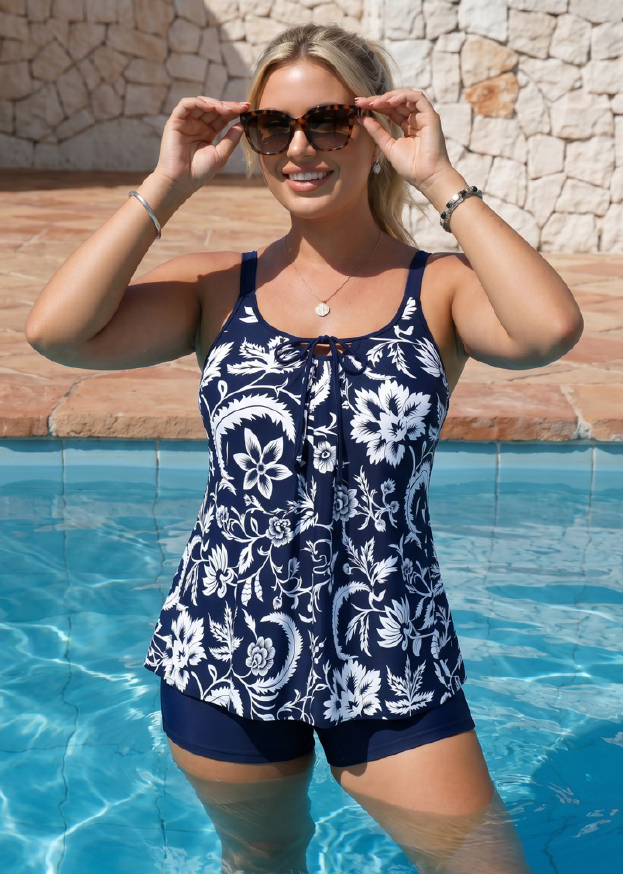
Navy Mid Waisted Lace Up Tankini Set
Start with current bust, waist, and hip measurements, following the measuring instructions supplied with the product. Compare them with that item’s size chart rather than relying entirely on the usual clothing size. Where torso measurements are available, use them to assess a one-piece that might otherwise pull at the shoulders.
If the bust and hips fall into different sizes, separately sold tops and bottoms may offer a useful alternative. Check that separate sizing is actually available before planning a combination. Choosing a larger size throughout can introduce gaps elsewhere, so use the chart and fit guidance to identify the problem.
Look closely at the support described inside the suit. Adjustable straps allow changes to strap length, while a built-in bra, underband, or shaped cups may affect how the bust sits. Padding and support are different features; a removable pad alone does not explain how securely the suit will fit.
Read the lining details, too. Ask the seller for clarification if the description leaves them unclear, and avoid judging wet opacity from a dark color or a product photograph. If sun protection is part of the decision, look for a stated UPF rating rather than assuming that extra coverage establishes one.
Use a Try-On Checklis
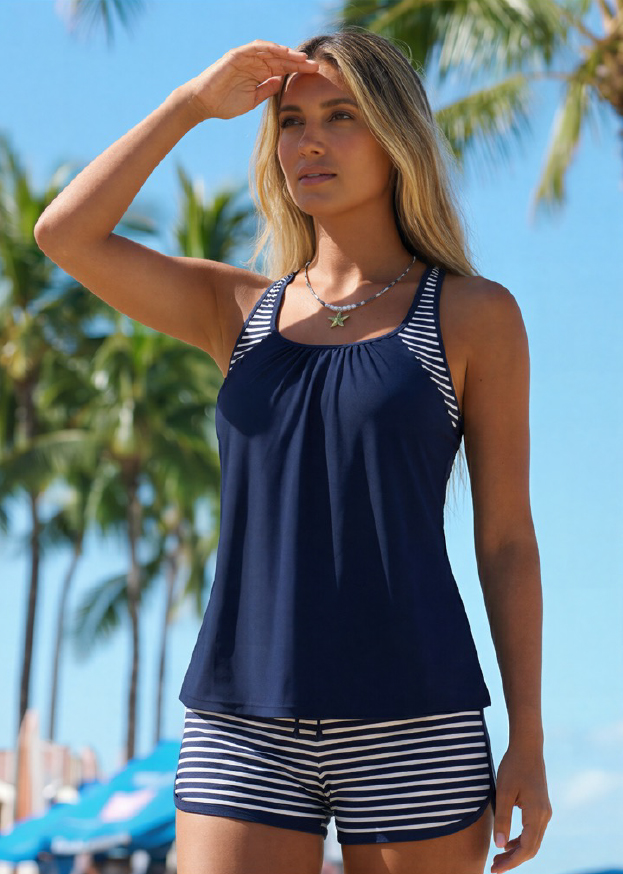
Tummy Coverage Mid Waisted Striped Navy Scoop Tankini Set
Before ordering, review the front and back photographs, included pieces, and return conditions. Once the suit arrives, keep tags and hygiene protection in place as required by the seller. A careful dry try-on can reveal fit issues before any decision to wear the garment in the water.
- Raise both arms and check whether the neckline, straps, or top hem shift.
- Bend forward and look for gaps at the chest or waistband.
- Sit down and check the back coverage, leg openings, and waistband comfort.
- Take a long step to assess restriction around the thighs and hips.
Notice how much adjusting follows each movement. Repeatedly pulling down a hem or repositioning a strap suggests that the cut or size deserves another look. Tightness, digging seams, and restricted movement are also useful signals; extra coverage should still allow comfortable movement.
Check practical details such as reaching a back fastening and removing the suit for a restroom visit. Avoid wet-testing a purchase while a return is still being considered unless the seller explicitly permits it. Dry fit checks help assess comfort, but cannot establish how opaque the fabric will be when wet.
Choose the swimsuit that meets the coverage priorities set at the start and feels comfortable through everyday movements. A clear view of the construction, a suitable size, and a thoughtful try-on provide a useful basis for deciding what earns a place in the swim bag.