




























By Kate Montecarlo Cordova
Founder and Chairwoman
Association of Transgender People in the Philippines
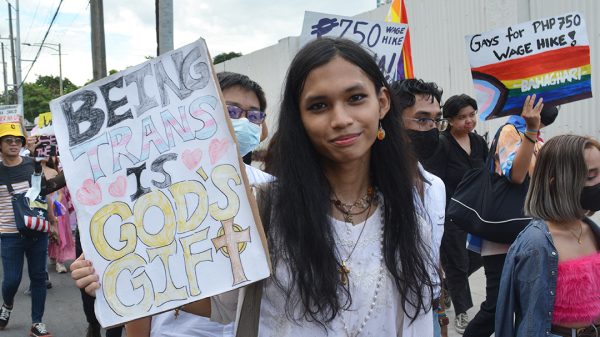
Gender ideology? Or religious ideology? Trans indoctrination? Or religious indoctrination?
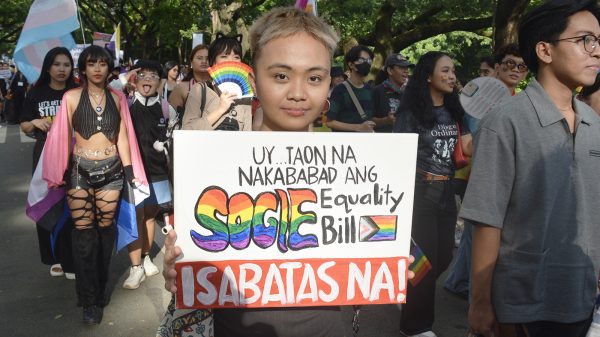
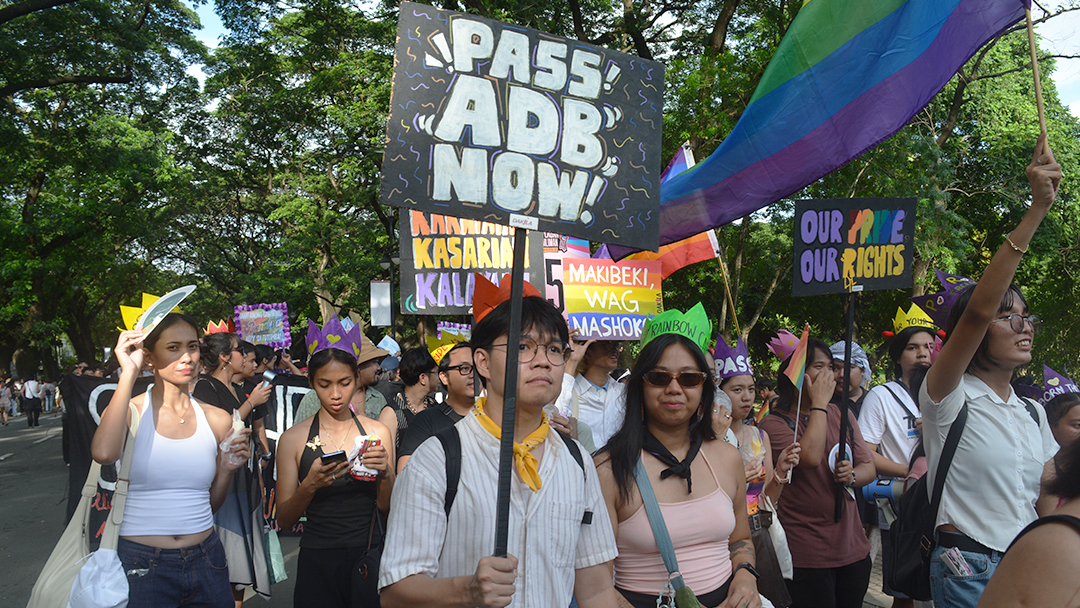
For more than two decades, the SOGIE Equality Bill has faced opposition in the Philippines. First filed in 2000, it still has not become law.
Conservative religious groups lobbying against it are a major reason it is stuck, alongside years of legislative inaction. Among its most vocal critics are organizations that characterize LGBT rights advocacy as an ideology, and sometimes as a form of indoctrination.
But there is an intellectual contradiction worth examining.
When religious institutions accuse the LGBT movement of promoting an ideology, are they opposing ideology itself, or merely an ideology that challenges their own?
First, we must distinguish three concepts frequently confused in public discourse: identity, ideology, and indoctrination.
Being transgender is not an ideology. Neither is being homosexual, heterosexual, or bisexual. These are dimensions of human identity and sexuality, not systems of political or religious belief.
LGBT rights advocacy, however, does advance principles: equality, dignity, autonomy, and freedom from discrimination. But advocating a principle is not synonymous with indoctrination. Indoctrination discourages critical examination. Advocacy can invite public debate, evidence, and scrutiny.
Now consider the irony.
Religious institutions have transmitted organized systems of belief, moral doctrines, and prescribed social roles across generations. Many teach children what to believe about sexuality, marriage, gender, morality, and human existence. That is their religious freedom.
By what consistent standard does the transmission of religious doctrine qualify as moral education, while the advocacy of equal civil protection becomes ideological indoctrination?
And what exactly is the Equality Bill attempting to accomplish?
At its core, the proposed legislation seeks to prohibit discrimination in areas such as employment, education, healthcare, and access to public services. These are not merely abstract philosophical disputes. They concern a job, a classroom, a hospital, a government office, a courtroom.
Yet some opponents frame these protections as an attempt to impose a worldview upon society.
Here lies another distinction. Protecting someone from discrimination does not necessarily require everyone to agree with that person’s identity, beliefs, or way of life.
A religious person may retain theological objections to homosexuality or transgender identity. Freedom of religion and conscience protects the right to hold and express religious convictions, subject to applicable law. But does that freedom automatically confer the right to deny another citizen equal treatment?
That is a different constitutional question.
In 2015, the Catholic Bishops’ Conference of the Philippines itself stated that discrimination against LGBTQ+ people is contrary to the Gospel spirit, while also questioning whether the anti-discrimination bill was a form of “cultural colonization.”
This raises a legitimate question: if discrimination is morally objectionable, what enforceable legal protections should exist against it? And if the proposed Equality Bill is considered unacceptable, what alternative remedies would adequately protect those experiencing discrimination?
Condemning discrimination is a moral declaration. Preventing it requires a concrete legal answer. Religious opposition is not unanimous, either.
The Union Theological Seminary, the Iglesia Filipina Independiente, and the National Council of Churches in the Philippines all participated in the Senate hearings on the bill.
The IFI’s Supreme Council of Bishops has issued a pastoral statement affirming the human dignity of LGBTQ+ persons and describing discrimination against them as part of the struggle for human rights.
These churches read the same Bible. They reached a different verdict. Religious identity does not produce a single, inevitable political conclusion.
Which brings us to the fundamental constitutional issue. The Philippines is a secular constitutional republic, not a theocracy. Religious organizations have every right to participate in democratic deliberation.
Their convictions deserve the same freedom of expression afforded to other citizens and institutions. Senator Hontiveros has noted that the bill does not legalize gay marriage, and that religious groups participated in committee deliberations, with certain concessions made.
The bill does not ask a pastor to change a sermon. It asks that no one be fired for who they are. But freedom to advocate religious doctrine is not the same as an automatic entitlement to transform that doctrine into universally binding civil law.
The harder question is whether institutional religious autonomy should justify exceptions to generally applicable anti-discrimination rules, and how far those exceptions should reach. A church must be free to govern its own doctrine, worship, and internal affairs. But the scope of that autonomy, especially where it intersects with employment, housing, education, and access to services, must be addressed by legislation within constitutional limits.
That is a question of constitutional balance, not a denial of religious freedom.
A Christian may believe certain conduct is sinful. A Muslim may follow different religious prescriptions. An atheist may reject the concept of religious sin altogether. Yet all are citizens under the same Constitution. The legitimacy of civil protection must be examined through constitutional principles, not established solely by the theological convictions of the majority.
This is why calling LGBT equality an ideology does not resolve the debate.
Religion can be ideological. Political conservatism can be ideological. Liberalism, feminism, and human-rights advocacy can also contain ideological commitments.
The existence of an ideology does not establish whether its claims are true, false, just, unjust, constitutional, or unconstitutional. Those conclusions require arguments, evidence, and legal reasoning.
The more consequential question is whose convictions are being treated as authoritative, whose freedoms are being protected, and whose lives may be regulated by beliefs they do not share.
Religious liberty and LGBT equality need not be enemies. Both demand serious consideration within a pluralistic society. But neither religious authority nor the language of human rights should exempt a proposed law from critical examination.
The challenge is to protect freedom of conscience while establishing fair and enforceable standards of civil treatment.
So maybe the debate should stop revolving around the accusation of ideology. Because the real issue is not whether people hold different beliefs. It is whether one group’s beliefs should determine another group’s access to equal protection under the law.
Faith requires freedom to believe. Equality requires protection from discrimination. Neither principle should become an instrument for extinguishing the other.