
































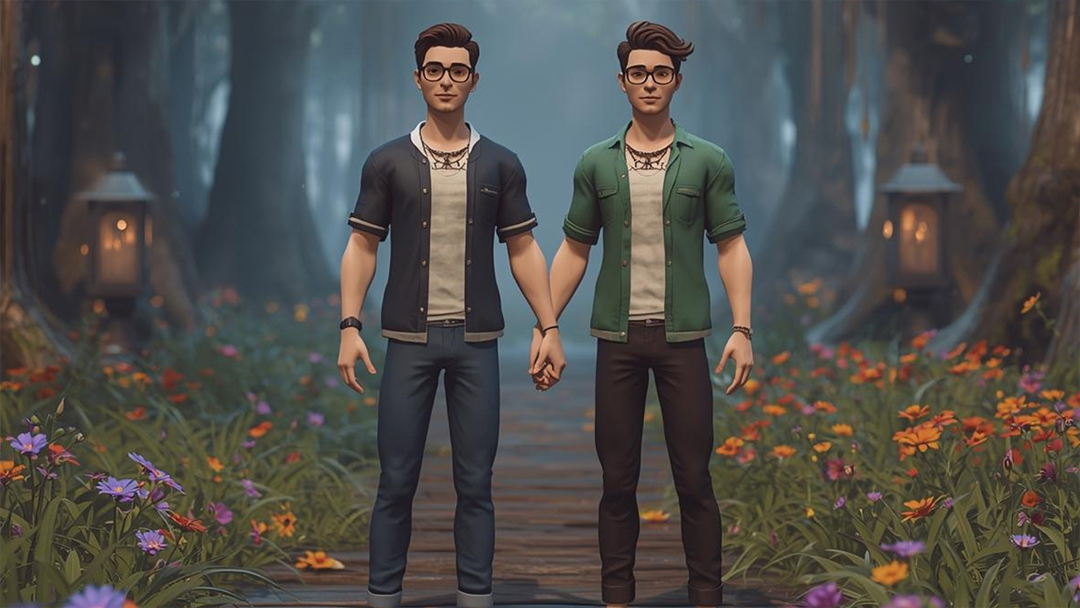
Videogame avatars can offer safer alternatives for exploring and expressing gender identities for transgender and gender diverse people.
This is according to a study – “A Decade of Avatars: A Systematic Review of Recreational Gaming as a Mechanism for Gender Identity Exploration and Affirmation” by C. Lolansen, N. Dean Marshall, C. T. L. Fisher, and T. L. Burleigh – that was published in the International Journal of Transgender Health.
Video games offer players diverse, meaningful experiences through emotionally resonant narratives and complex characters with some games allowing players to customize virtual extensions of themselves, known as avatars, through which they explore environments, narratives, and social interactions.
For this study, the researchers examined research from the past decade, analyzing 14 studies in total, and found that avatar customization is a unique mechanism for exploring, expressing, and affirming gender identity for transgender players and has a positive impact on wellbeing.
Participants in the studies that were reviewed reported reduced gender dysphoria and increased gender euphoria when avatars aligned with their gender identity and desired expression. This effect was particularly strong when other players affirmed the players’ gender identity based on their in-game avatar.
These effects were most pronounced in role-playing and narrative-driven games and in games with high levels of avatar customization. An example of this is the game Baldur’s Gate 3, which was highlighted by participants as having both a rich, emotionally impactful narrative as well as inclusive and meaningful avatar customization options.
Studies also highlighted the online environment as a safer alternative for gender identity exploration and expression than offline environments.
According to Lolansen, “In times of increasing infringements on transgender and gender diverse people’s rights and access to care, it’s becoming incredibly important to explore new ways of supporting these individuals, particularly when gender affirming care may be limited. Our findings are not only important for cyberpsychology, but for clinicians and healthcare providers seeking to support transgender and gender diverse individuals using a low-cost intervention to enhance their wellbeing.”
Co-author Marshall added: “This research shows that video games can be more than just entertainment, they can be affirming spaces that support identity development. Game designers and mental health professionals have an opportunity to leverage these findings for inclusive design and psychological interventions.”