


















There was a time when creating a convincing fashion photograph required a model, a stylist, a make-up artist, a carefully chosen location and, naturally, a photographer who understood light. It still does—if the aim is to photograph something that exists.
Artificial intelligence begins with a different proposition: what if the image never existed at all?
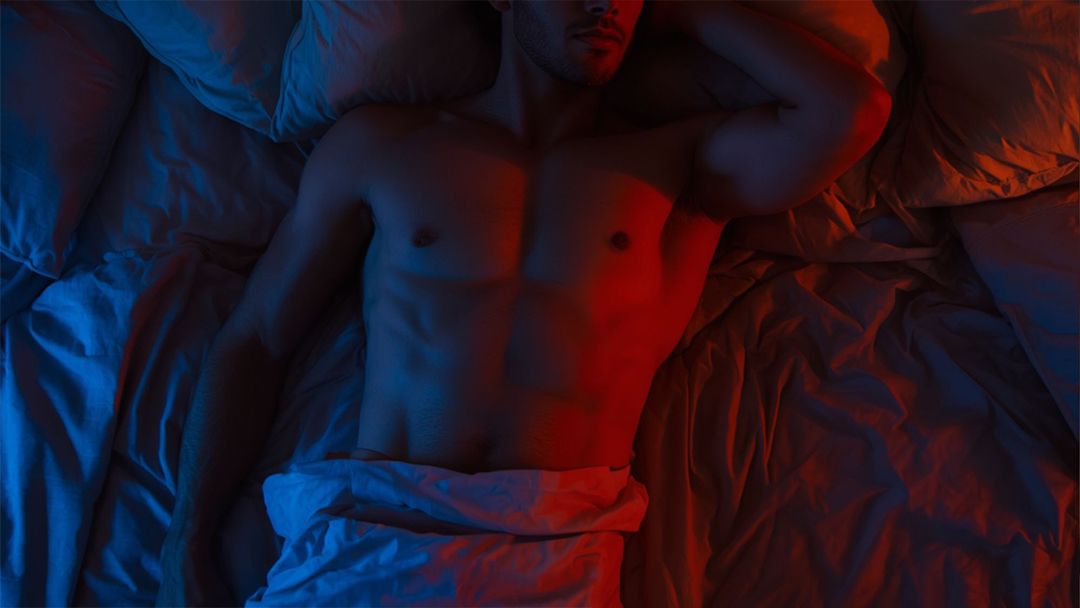
Today, a person sitting at home can describe a face, a pair of glasses, a mood and a room illuminated by the last blue light of evening. Within moments, a synthetic portrait appears. It may resemble editorial photography, cinematic fantasy or an image from a campaign for a brand that has not yet been invented.
The same technology is now moving into adult visual culture. This development is often reduced to its most provocative aspect, yet it also raises fascinating questions about creativity, identity and the way we look at images. When the model, photographer and location can all be fictional, what exactly are we seeing?
From Capturing an Image to Inventing One
Photography has traditionally depended on a moment in front of a lens. Even the most carefully staged editorial shoot begins with real light falling on a real subject.
Generative AI does not capture a moment. It assembles one.
The user writes a description, selects a visual direction and asks the system to interpret it. A prompt can include the character’s age, expression, clothing, surroundings, lighting and photographic style. It may describe a sophisticated portrait in a hotel room, a dramatic black-and-white composition or a colourful scene inspired by glossy magazine photography.
The result is not a photograph in the traditional sense, although it may borrow the visual language of photography. It is closer to a digital illustration constructed from patterns the system has learned.
That distinction is becoming harder to notice with the naked eye. Synthetic skin, reflections and fabric have grown more convincing. Eyewear, once particularly difficult for image generators because of transparent lenses and symmetrical frames, is also rendered with increasing accuracy.
AI has learned to understand not only objects, but atmosphere.
Glasses Can Define a Fictional Character
A pair of glasses is a surprisingly powerful detail in an AI-generated portrait.
Change the frame and the character changes with it. Thin metal glasses can suggest precision and restraint. Oversized acetate frames feel bolder and more theatrical. Cat-eye silhouettes introduce vintage glamour, while tinted lenses can make a portrait mysterious or deliberately distant.
Human stylists have always understood this. Eyewear does more than correct vision or protect the eyes. It influences how a face is read.
AI generators make it possible to test these visual identities without organising an entire shoot. A creator can compare several frame shapes, colours and materials on a fictional model, then change the lighting or setting while keeping the broader concept intact.
The technology is not replacing the tactile qualities of real eyewear. A generated frame has no weight, hinge or optical performance. It cannot tell us whether a design will feel comfortable after eight hours.
What it can do is explore an idea.
That makes AI useful at the beginning of the creative process, when the question is not yet “Can we manufacture this?” but “What might this look like?”
Why Adult Imagery Has Become an AI Testing Ground
New visual technologies often develop quickly in areas where audiences demand novelty and personalisation. Adult entertainment has both.
Conventional content presents a finished image created for a broad audience. Generative tools invite the viewer to participate. Instead of choosing between existing photographs, the user describes the fictional person, mood and visual style they want to see.
An 18+ AI generator https://joi.com/generate/18-ai-generator such as the one available from JOI turns that description into customised adult artwork. It supports text-based creation and reference-guided experimentation, with options ranging from realistic-looking compositions to more obviously illustrated or fantastical styles.
The attraction is not merely the possibility of producing nudity. It is the control over the complete image.
A user might prefer mature features rather than the suspiciously youthful perfection common in digital media. Another may be interested in alternative fashion, elaborate eyewear or a body type rarely represented in commercial photography. Someone else may want a scene that could never be built in a studio.
AI offers a canvas on which these choices can be combined.
The Return of the Private Image
Before social platforms, many photographs had small audiences. They lived in albums, drawers and wallets. Their importance came from intimacy rather than visibility.
Digital culture changed that relationship. Images began to feel unfinished until they were posted, liked and shared. Even private moments were frequently created with a public audience in mind.
AI-generated adult art moves in the opposite direction. Its purpose may be entirely personal. The user does not need to publish it or persuade anyone else to understand the appeal. A fictional image can be generated, viewed and deleted without ever becoming a performance for social media.
This privacy is one of the technology’s most interesting qualities. Personal taste does not always fit neatly into popular categories. When the image is custom-made, there is no need to search through hundreds of unrelated results or accept someone else’s idea of beauty.
The user becomes both commissioner and audience.
Of course, digital privacy never happens automatically. Prompts, uploaded files and generated pictures are still data. Anyone using an adult creative platform should understand how that information is stored and whether it can be deleted.
A private-looking interface is not the same thing as a guarantee of privacy.
The Prompt Is the New Creative Brief
A good prompt resembles the brief for a photographer, although it needs to be written differently.
Listing twenty unrelated details often produces a confused image. A clearer approach is to begin with the visual idea and then add the details that matter most.
Consider the difference:
“Woman wearing glasses in a room.”
Now compare it with:
“Editorial portrait of a confident fictional woman in her forties, wearing angular tortoiseshell glasses, photographed beside a rain-covered window with warm evening light.”
The second prompt establishes a character, composition and mood. It gives the system a hierarchy.
The most useful elements normally include:
- the fictional subject and general appearance;
- the style of eyewear or clothing;
- the setting;
- the lighting;
- the emotional tone;
- the desired visual treatment.
Words such as “editorial,” “cinematic,” “soft-focus” or “high-contrast” can have a greater effect than an endless inventory of physical details.
This is why prompt writing is becoming a creative skill. The user must learn to describe not only what should appear, but how the finished image should feel.
Perfection Is Not Always Interesting
Early synthetic portraits were easy to identify. Faces appeared polished but lifeless. Skin had no texture, eyes looked strangely reflective and every expression carried the same vague digital smile.
Modern generators are better, but there is still a temptation to ask for impossible perfection.
The result can become visually impressive and emotionally empty.
Fashion photography has long understood the importance of character. A memorable face is not necessarily symmetrical. A striking portrait may include wrinkles, freckles, unconventional proportions or an expression that cannot be described as simply “beautiful.”
Adult AI imagery becomes more interesting when it follows the same principle. Mature characters, individual styling and believable environments create more personality than an immaculate body floating in a generic bedroom.
Glasses can contribute to this sense of specificity. A frame slightly lowered on the nose or catching an imperfect reflection suggests a moment rather than a catalogue illustration.
The technology may be synthetic, but the image still benefits from human irregularity.
When a Reference Becomes a Responsibility
Reference images can help a generator understand pose, composition or aesthetic direction. They can also create serious ethical problems.
Uploading a photograph of a real person does not automatically provide permission to place that person in an adult context. A portrait found on social media, a photograph of a colleague or an image of a former partner should not become raw material for synthetic nudity.
Consent remains essential, even if the resulting picture was produced by an algorithm.
The safest approach is to work with completely fictional adult characters or references for which clear permission has been obtained. Creators should also avoid names, distinctive tattoos or other details intended to identify an unsuspecting individual.
This boundary does not restrict genuine creativity. On the contrary, inventing a character from the beginning offers far more freedom than copying somebody who already exists.
The face can belong to no one—and still have a story.
Can We Still Trust What We See?
AI-generated imagery complicates our relationship with visual evidence.
For most of photography’s history, manipulation existed, but a photograph still carried an assumption that something had stood in front of the camera. That assumption is no longer reliable.
A highly realistic portrait may depict a person who has never lived. The glasses may never have been designed, the room may have no address and the light may come from a sunset calculated rather than observed.
This does not make the image worthless. Illustration has never needed to document reality in order to possess beauty or meaning. The problem appears when synthetic work is presented as documentary photography or used to impersonate a real person.
Labelling matters. Viewers should be able to distinguish an AI creation from an authentic photograph when the context could cause confusion.
The more realistic generators become, the more valuable transparency will be.
A Tool, Not a Taste-Maker
AI can offer variations at extraordinary speed, but it does not decide which image is worth keeping.
That judgement remains human.
A generator may produce ten portraits with different frames. A person still chooses the one with the strongest character. The system may suggest a surprising combination of colour and light, but someone must recognise why it works.
This is where creativity survives automation. The process becomes faster, yet taste does not become automatic.
The best use of adult AI art is therefore not to generate the largest possible number of images. It is to develop a clear idea, experiment with it and select the result that says something distinctive.
Technology supplies possibilities. The eye provides direction.
Looking Ahead
Synthetic photography will continue to improve. Characters will become more consistent between images, video will become smoother, and small details such as jewellery, hands and reflections will require fewer corrections.
Yet the most important development may not be realism. It may be accessible.
People who have never worked with a camera, model or design application can now experiment with composition and visual storytelling. Adult imagery is only one area of this broader change, but it demonstrates how strongly users value creative control.
The screen is becoming a new kind of lens—one that does not simply show the world but constructs a world in response to language.
What appears through that lens can be elegant, provocative, strange or beautiful. It can feature a fictional face behind an impossible pair of glasses, looking back from a moment that never happened.
The image is artificial. The taste that shaped it is not.