


















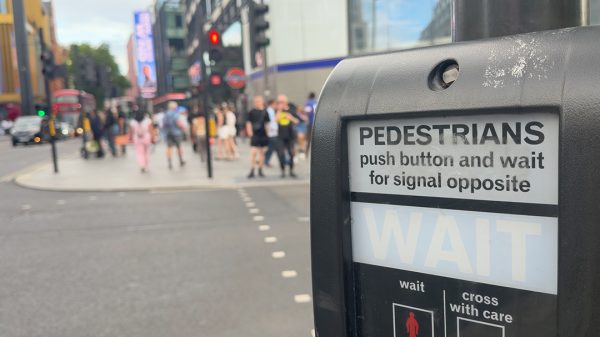


So from Barangay Dioquino Zobel in Quezon City, I was a passenger of a car driving back to the City of Manila, and we had to pass by the four lane (two each way) Aurora Blvd. Somewhere near Cubao LRT-2 Station, there’s a traffic light: the left lane leads to Gateway Mall, and the right lane goes straight. As we approached that section, we were on the left lane, but the traffic light for that was red/no go, so we shifted to the right lane.
Then, WHAM! A traffic “enforcer” appeared.
“You can’t change lanes,” he said.
There were no arrows on the street signaling that the left lane was solely for those turning left. No road signs claiming anything to this effect, too. And no unbroken lines on the street to disallow changing lanes.
But he insisted. “There was violation.”
He was quick to give a solution, though: if I issue a ticket, you’d be charged 1,500. You may as well give me the money, so – as the supervisor – I can feed all the people for them to look away from your violation (those also on duty, and the people at the city hall).
This wasn’t the first time I witnessed something like this. But aside from the usual spiel (like the “pakain na lang”, as stated above), new ones were added – e.g. even if you choose to just pay the fine, the online payment supposedly does not work, so you have to go to the city hall and “waste your time sa pila”. And then… the same clincher: you’d be better off just bribing me.
Oh, BTW, “Di ko kayo pinipilit, iniisip ko lang kalagayan nyo.”
It’s easy to say that people should not cave in, to stand your ground, take the higher ground and not pay/just be fined. Alas, life’s not black and white.
E.g. One time, I was in OsMak for over two hours, hoping for a doctor, any doctor, to look at my fractured bleeding toe. But I – along with “less rushed” patients like that guy who was stabbed in the tummy – weren’t priorities. I’ve also seen people with HIV queue at treatment facilities before the break of dawn, or else miss the 7AM cut-off (and therefore not be served).
So if you have not tried queuing in any government agency in this God-forsaken country, then you don’t really know how bad the “pila sa city hall” sounds. That wasn’t a statement, it was a threat.
But what that moment reminded me of was the prevalence of nakaw in Pinoy culture. We are so used to it, we no longer bat an eye, and just take it as “the way things are”.
This is why it’s not surprising for me to see the kalakaran, the tulis, these ways of making some living off misdeeds in other sectors… now including civil society.
And HIV “advocacy” is, for me, a grand example. Particularly the profiteering involving the OHAT Package, which grants every PhilHealth-paying person living with HIV ₱58,500 per year.
HIV facilities continue to thrive even if they collect that money without rendering services. Some come up with “magical” items in the SOA (e.g. counseling fee even if counseling is never given) just to justify collecting the exact amount. Still some make their PLHIV clients get labs elsewhere, making them pay extra out of their pockets for these tests, but then they claim the amount supposed to have been allocated to the PLHIV from PhilHealth anyway.
Like too many politicians who get too rich while in office, too many NGO people fatten their wallets while pretending to “serve”.
And we’re left with this inability to do anything.
They’re the rich people. And you know how we stupidly bend the rules for them so they can continue abusing the rest of us. They have become so “big” they now dictate the kalakaran – e.g. I have lost count how many times I have heard of PLHIVs being told: “Kung may reklamo ka, umalis ka sa HIV facility namin!”.
Nakakapagod din.
Because too many times we, basically, are just left with no choices. But exactly due to that, nakakagalit na rin. And really, only those who have been oppressed (and do not want the oppression to be experienced by others, too) can truly understand, and desire for major changes to happen.
Simulan na natin, please.