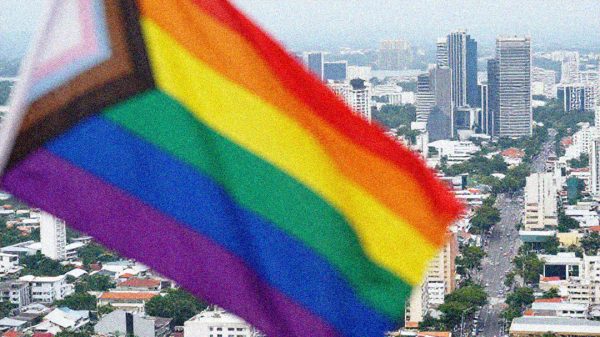







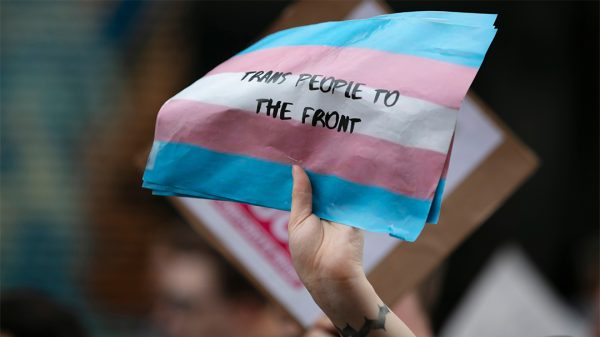










In Russia, access to Roblox has been banned, with the country’s authorities claiming it as a host of “LGBT propaganda”.
Roblox is an online platform and game creation system that has an estimated 380 million monthly active users (MAUs), with around 60% of them under the age of 16. Here, users can play user-generated “experiences” (or games) while creating their own using Roblox Studio.
In a statement explaining the decision, Russia’s communications watchdog Roskomnadzor said that it removed the ability to access Roblox as it was “rife with inappropriate content that can negatively impact the spiritual and moral development of children”.
In 2013, Russia implemented the “Law for the Purpose of Protecting Children from Information Advocating a Denial of Traditional Family Values”, designed to mark LGBTQIA+ content as contradictory to “traditional Russian values”.
In a statement issued to Reuters, a Roblox spokersperson stated: “We respect the local laws and regulations in the countries where we operate and believe Roblox provides a positive space for learning, creation and meaningful connection for everyone… (Roblox has) a deep commitment to safety and we have a robust set of proactive and preventative safety measures designed to catch and prevent harmful content on our platform.”
Russia’s Roblox ban follows Iraq and Turkey, which also blocked access to the platform after claiming concerns over child safety, particularly since it has over 90-110 million daily active users (DAUs) as of late 2024/early 2025.
Idiotically, as if showing technology awareness particularly as used by the youth, politicians seem unaware or ignore the fact that users can just use a virtual private network (VPN) to bypass geo-blocks or IP bans, access non-local contents, and even improve their security. And this is even if users could potentially be banned for using VPN when accessing Roblox.