







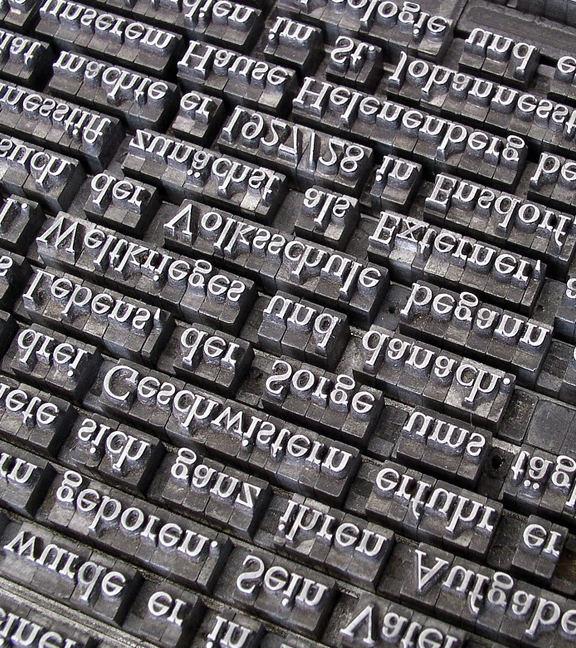
Watch those words.
That language evolves is a given; so it is not surprising that references to gender expression were noted in the evolution of some words in the Filipino language.
A good example is an old word used in the Philippines to refer to effeminate men, i.e. syoki, which was believed to be derived from Hokkien (Minnan) words syo and ki to mean “with weak spirit”. Suffice to say, the word suggests that effeminate men are weak (Tan, n.d.).
In the past, the term used to identify mainly cross-dressing effeminate men was bakla, while the female counterpart was tomboy. It is worth noting that while Western terminology has long entered the local lingo (e.g. LGBT), these remain widely used, particularly in areas outside of metropolitan cities.
But for Michael L. Tan (n.d.), to also better understand the LGBTQIA community in the Philippines, understanding Filipino concepts of gender is necessary. This is because these words (mentioned above) are based on concepts that are biologically based related to roles in reproduction.
As such, in the Philippines, definitions used particularly on gays and lesbians “keep going back to a biological dichotomy of a male and female… Both ‘tomboy’ and ‘bakla’ center on ‘inversion’, in the sense of a male taking on female mannerisms, way of dressing and of a female taking on male”.
Tan stated that, generally, “one could not be bakla, or gay, if he was not effeminate, and one could not be tomboy, or lesbian, unless she was masculine.”
This way, a bakla was a “girl”, and as “girls”, they will not have sex with other bakla (also considered as “girls”), as this was considered “tantamount to lesbianism”. The tomboy, meanwhile, is “constructed as a man trapped in a woman’s body” (Tan, 2001).
Sources:
Tan, M.L. (n.d.). Filipino Keywords Related to Sexuality.
Tan, M.L. (2001). Survival Through Pluralism: Emerging Gay Communities in the Philippines. Gay and Lesbian Asia: Culture, Identity, Community. Gerard Sullivan & Peter A. Jackson (Eds.). The Haworth Press Inc. 117-142.
UNDP, USAID (2014). “Being LGBT in Asia: The Philippines Country Report.” Bangkok.