








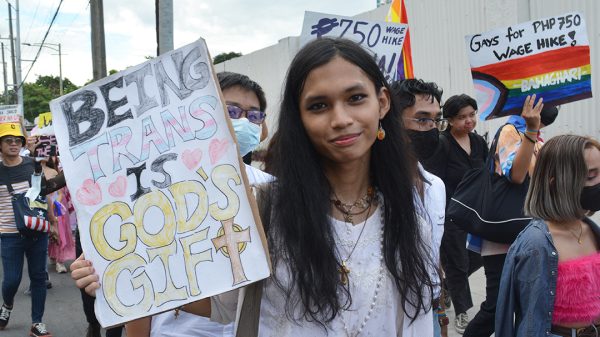


















Gender-diverse adolescents who experience bullying and live in states with persistently unsupportive gender identity laws are significantly more likely to suffer escalating psychological distress compared to their peers.
This is according to a study, “Bullying, State Policy, and Mental Health Symptoms in Gender-Diverse Youths”, that was published in JAMA Network.
CHECKING VICTIMIZATION DUE TO GENDER DIVERSITY
In this study, UCLA researchers analyzed data from the Adolescent Brain Cognitive Development (ABCD) Study, a large, population-based longitudinal study that has tracked adolescents across 21 sites in 17 US states since they were 9 years old. Researchers used the data to perform both a point-in-time analysis of 8,463 participants with an average age of 13, and a longitudinal analysis followed 4,200 participants across five data collection waves between 2017 and 2022.
Participants were assessed for gender diversity, bullying victimization and PLEs. Gender diversity was measured dimensionally by capturing how congruent or incongruent each adolescent’s sense of gender was with their birth-assigned sex, rather than relying solely on whether a participant self-identified as transgender or gender nonconforming. Bullying victimization was captured through self-reported frequency of bullying experiences. Psychotic-like experiences (PLEs) were measured using the Prodromal Questionnaire-Brief Child Version, a validated screening tool that asks adolescents about the presence and associated distress of subtle psychological symptoms.
Researchers also used state-level policy data from the Movement Advance Project (MAP) nonprofit group to determine whether the participant’s state maintained supportive or unsupportive legislation related to gender identity in a given year.
KEY FINDINGS
The study results suggest that the mental health burden carried by gender-diverse youth is not an inherent consequence of gender diversity but rather is shaped by the social and political environments in which these young people live.
“What we’re seeing is that stigma has measurable neuropsychiatric consequences,” said the study’s senior author Carrie Bearden, a professor of psychiatry at the UCLA Semel Institute of Neuroscience and Human Behavior and the UCLA Brain Research Institute. “Bullying and unsupportive legislation are not abstract policy concerns; they translate into real and serious symptoms in adolescents’ day-to-day lives.”
Gender-diverse youth reported significantly higher rates of both bullying victimization and psychotic-like experiences (PLEs) than their peers. Bullying acted as a mediator between gender-diversity and PLEs and accounted for 18% of that difference.
“These experiences… are subtle, distressing internal experiences such as feeling unusually suspicious of others, thinking others are talking or laughing at them, feeling threatened or hearing sounds others do not. PLEs are not clinical psychosis. However, if untreated, these experiences can lead to increased risk of developing mental disorders such as depression, anxiety, self-harming behavior and psychotic disorder,” the researchers stated.
POLICY CHANGE DESIRED
Local policy told a more gradual story. No differences emerged at any single point in time, but adolescents in locations that consistently lacked supportive gender identity legislation showed significantly greater increases in PLEs over four years. In all other groups, regardless of gender diversity, PLEs declined or held steady.
The researchers hypothesize that chronic exposure to bullying and an unsupportive political climate may foster hypervigilance in gender-diverse teens, which is a core feature of psychotic-spectrum symptoms.
“Without clinicians asking the right questions about a patient’s social environment, we may miss out on robust treatment targets,” said the study’s first author Dylan Hughes, a clinical psychology graduate student at UCLA. “At the same time, policy makers – and voters – also play an important role. Voting on a policy with the intention of helping our youth should include consideration of the policy’s downstream effects on these kids’ mental health.”