




















On 16 May 2015, transgender woman Claire was dismissed by her employer, Tanduay Distillers Inc. in Cabuyao, Laguna; along with 95 other contractual employees, she was told to stop reporting to work by 18 May.
That it was too easy for the company to dismiss them particularly stung considering that among those who were dumped, there were workers who supposedly worked for the company for five to 11 years, and yet – despite the length of their employment – remained non-regular employees, and were, therefore, “legally” disposable to the company.
After holding a sudden strike that was met with violence, the workers eventually formed Tanggulan Ugnayang Daluyang Lakas ng Anakpawis sa Tanduay Distillers (TUDLA), with Claire among the recognized leaders. The call was for regularization of those who were dismissed, along with the plant’s 397 contractual workers (approximately 90% of the total workforce of the facility in Cabuyao), and improvement of their working conditions.
Interviewed by Outrage Magazine at that time, Claire said her being part of the LGBTQIA+ community added work-related issues – e.g. she was forced to be “appear more manly”, including getting a haircut and wearing clothes stereotypically used by men.
For Claire, therefore, LGBTQIA+ issues are “part of the bigger issue on labor practices in the Philippines. “Hindi na ito naging usapin lang ng pagiging LGBTQIA+; usapin na rin ito ng kawalan ng karapatan maging LGBTQIA+ man o hindi (This is no longer just an issue of being LGBTQIA+; this is also an issue of the lack of rights for LGBTQIA+ and for non-LGBTQIA+ people).”
It is to celebrate – and continue to push for the rights of – working people like Claire that led to the observance of the International Workers’ Day, or International Labor Day, every 1st of May.
And if there is a thing that is worth highlighting, stated Aaron Moises C. Bonete, co-executive director of Bahaghari Center for SOGIE Research, Education and Advocacy, Inc. (Bahaghari Center), it is that “LGBTQIA+ people are also part of the working class, and yet they may have unique needs because of their SOGIESC that also need to be tackled both by the labor sector… and yes, by the LGBTQIA+ community.”
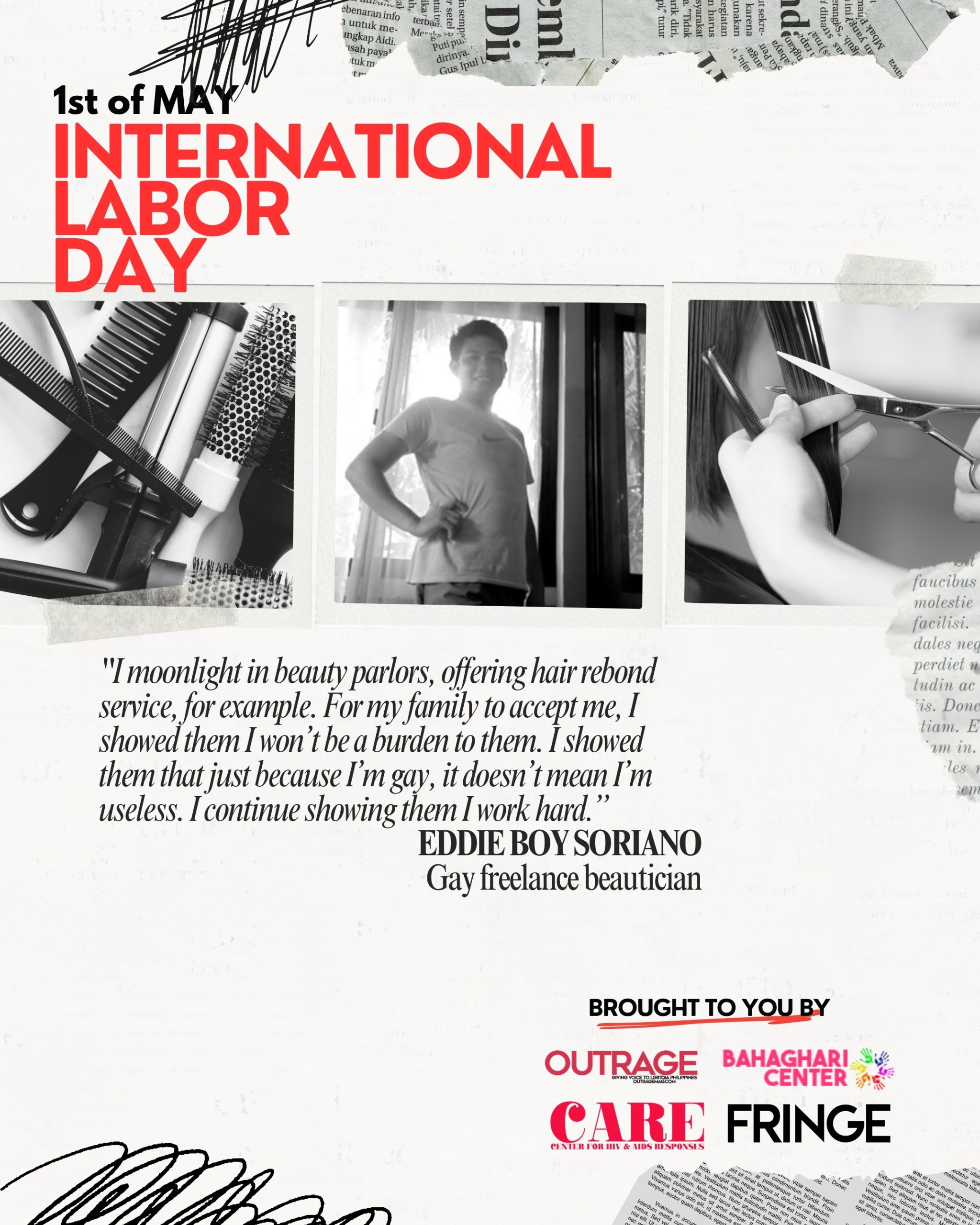
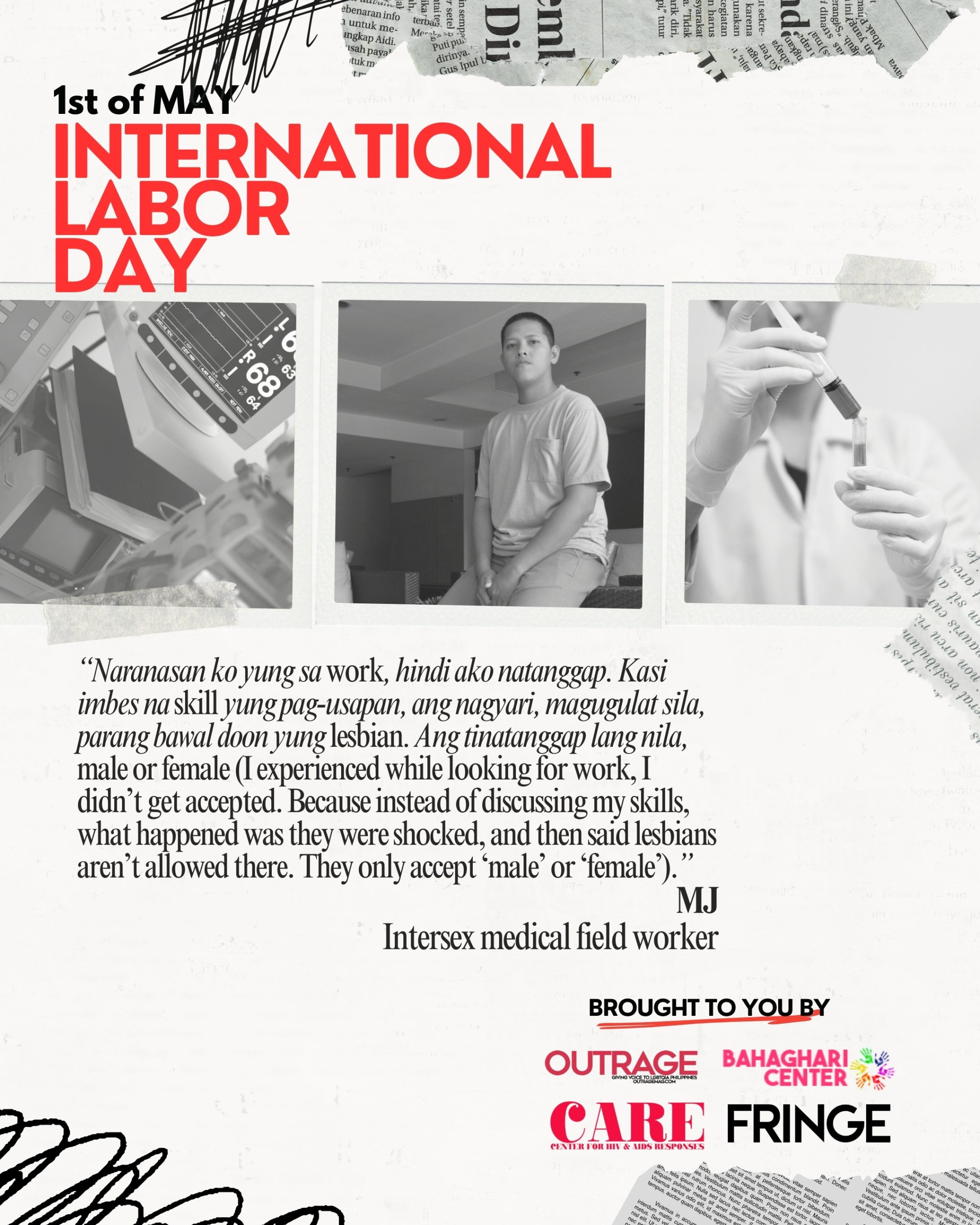
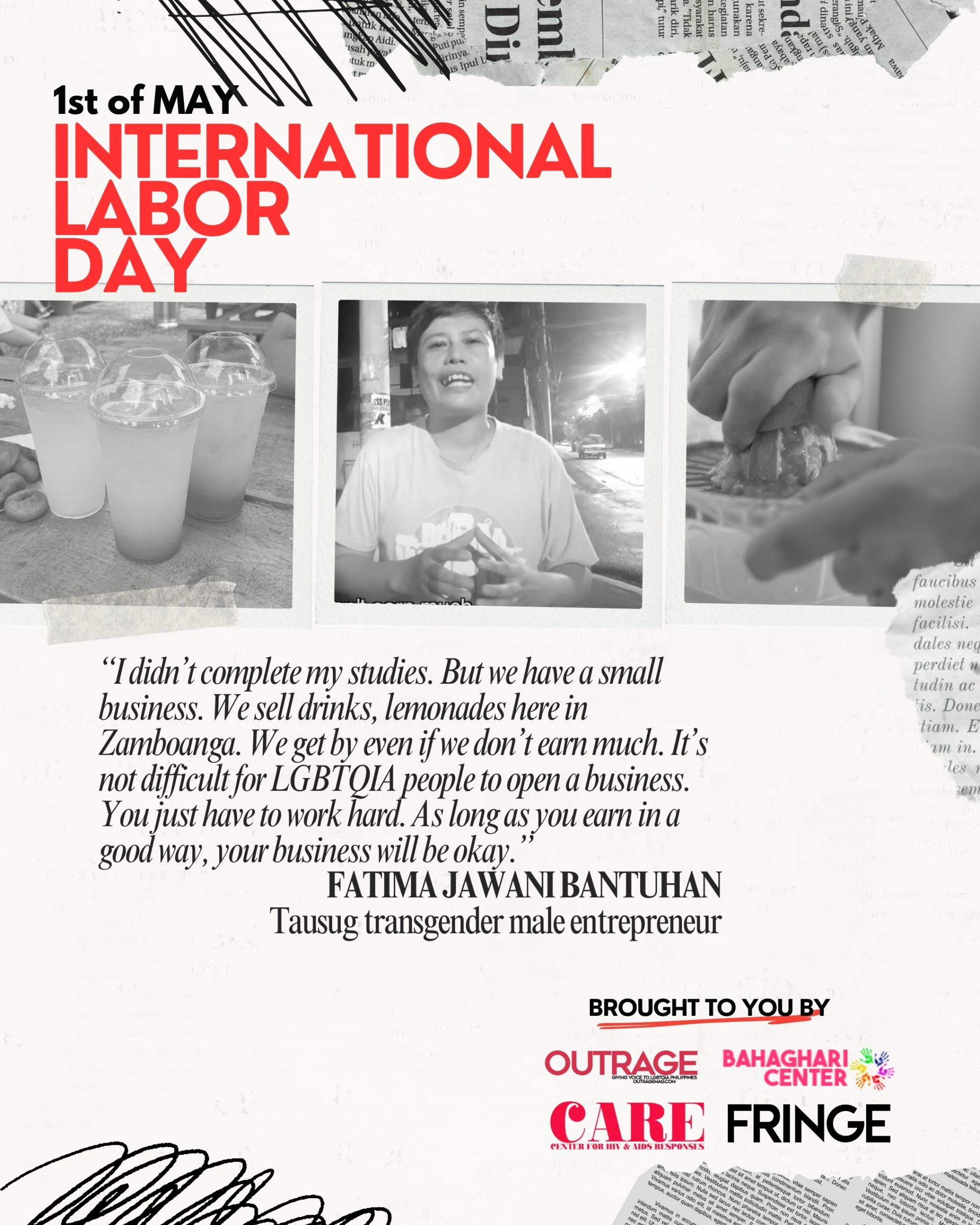
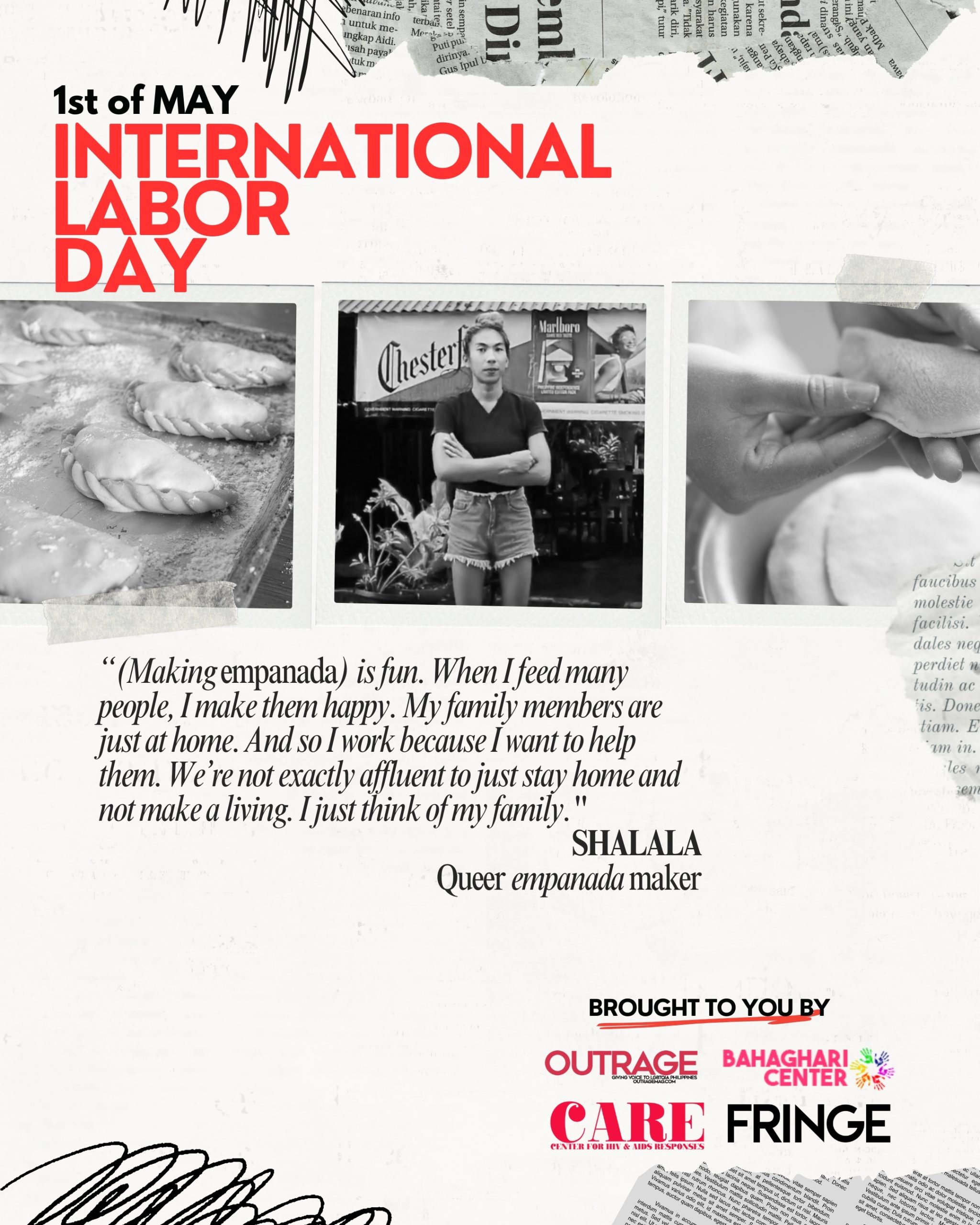
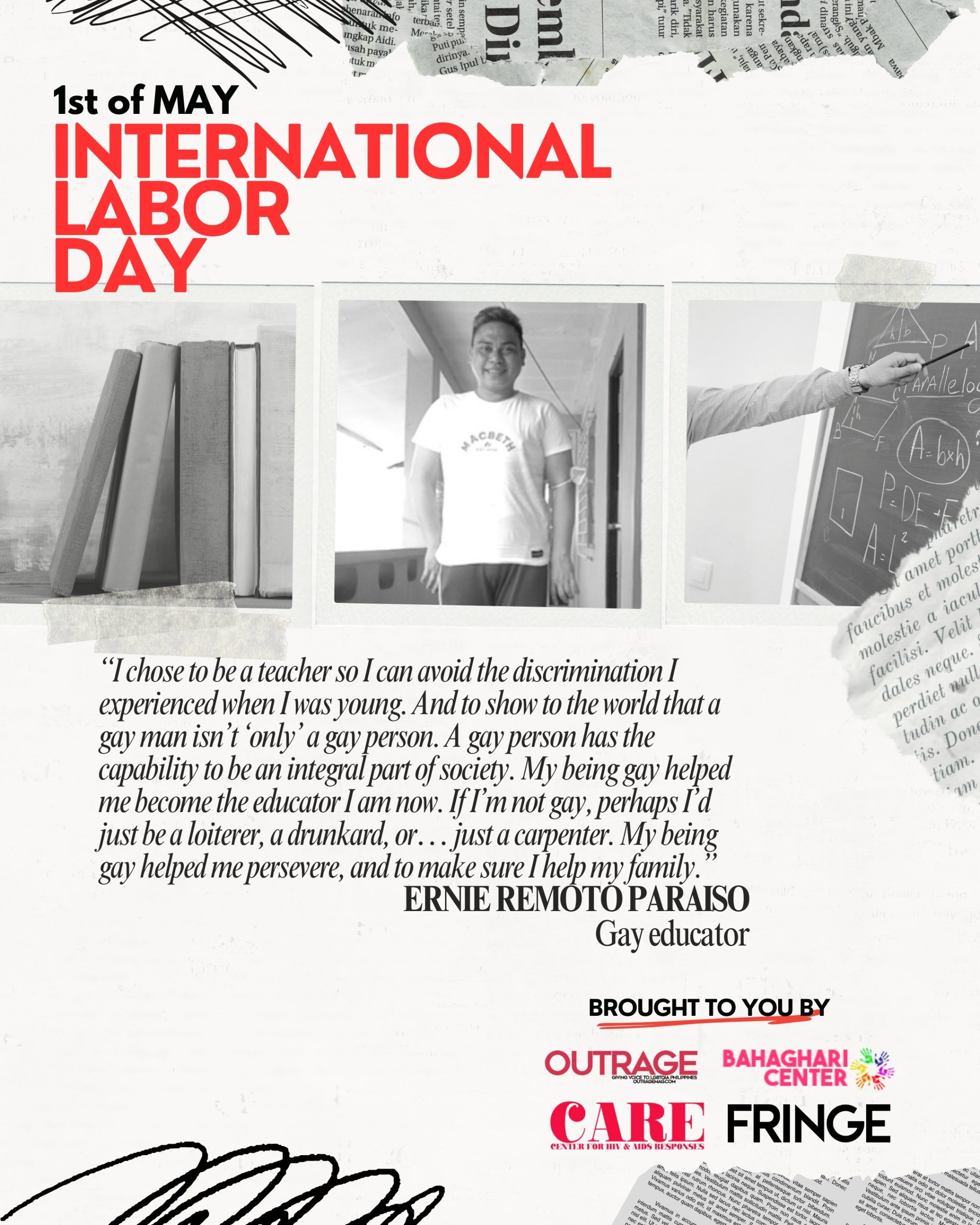
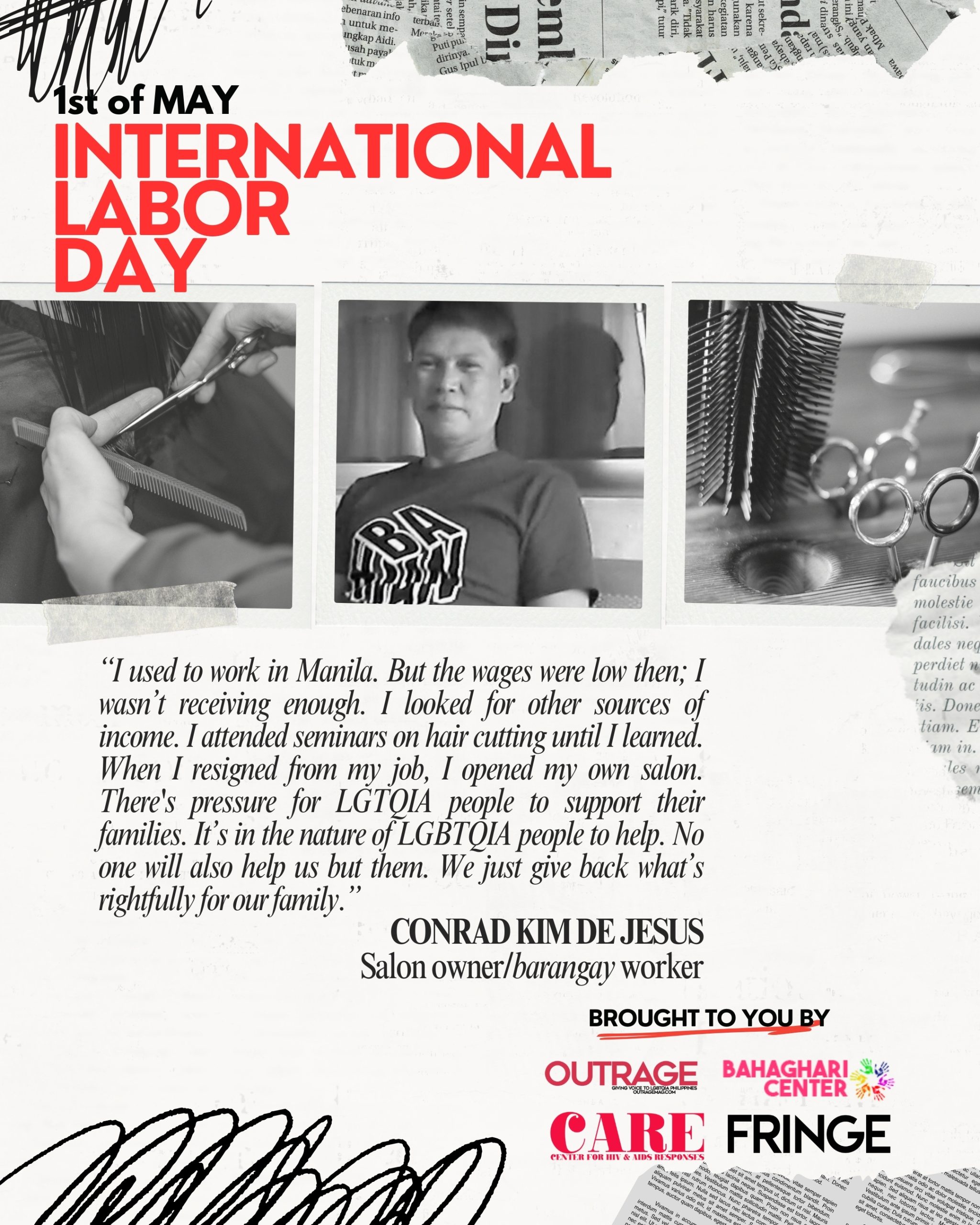
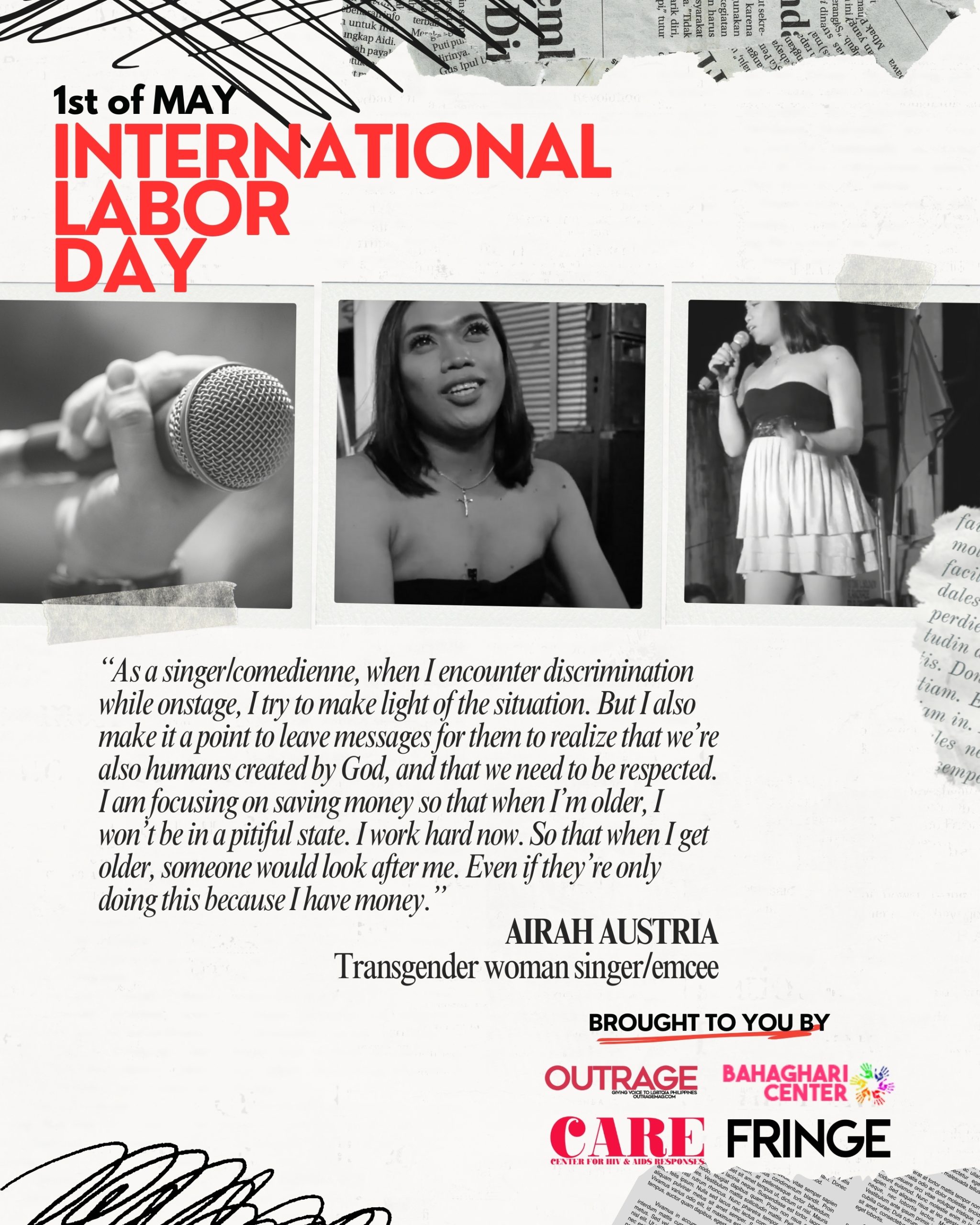
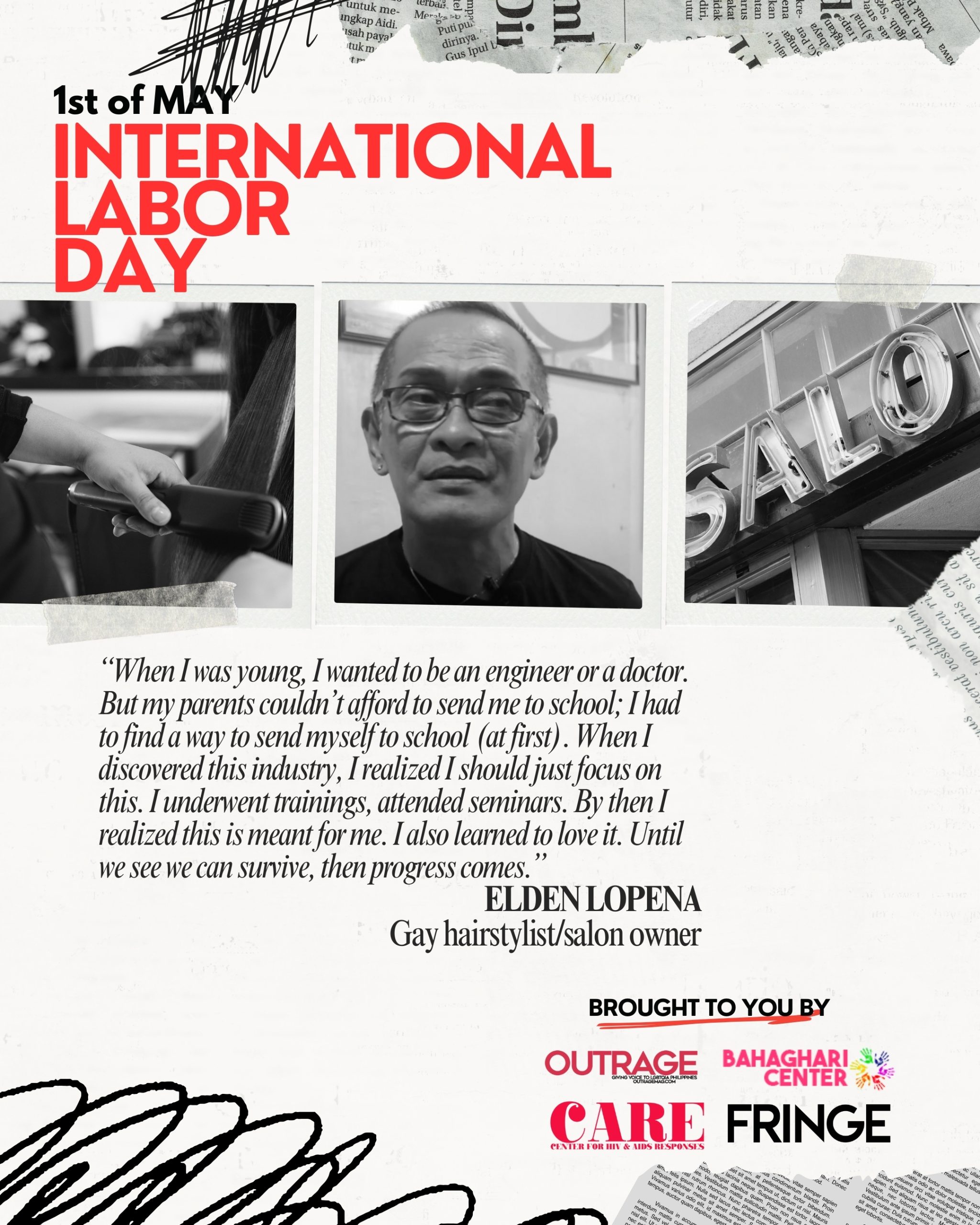
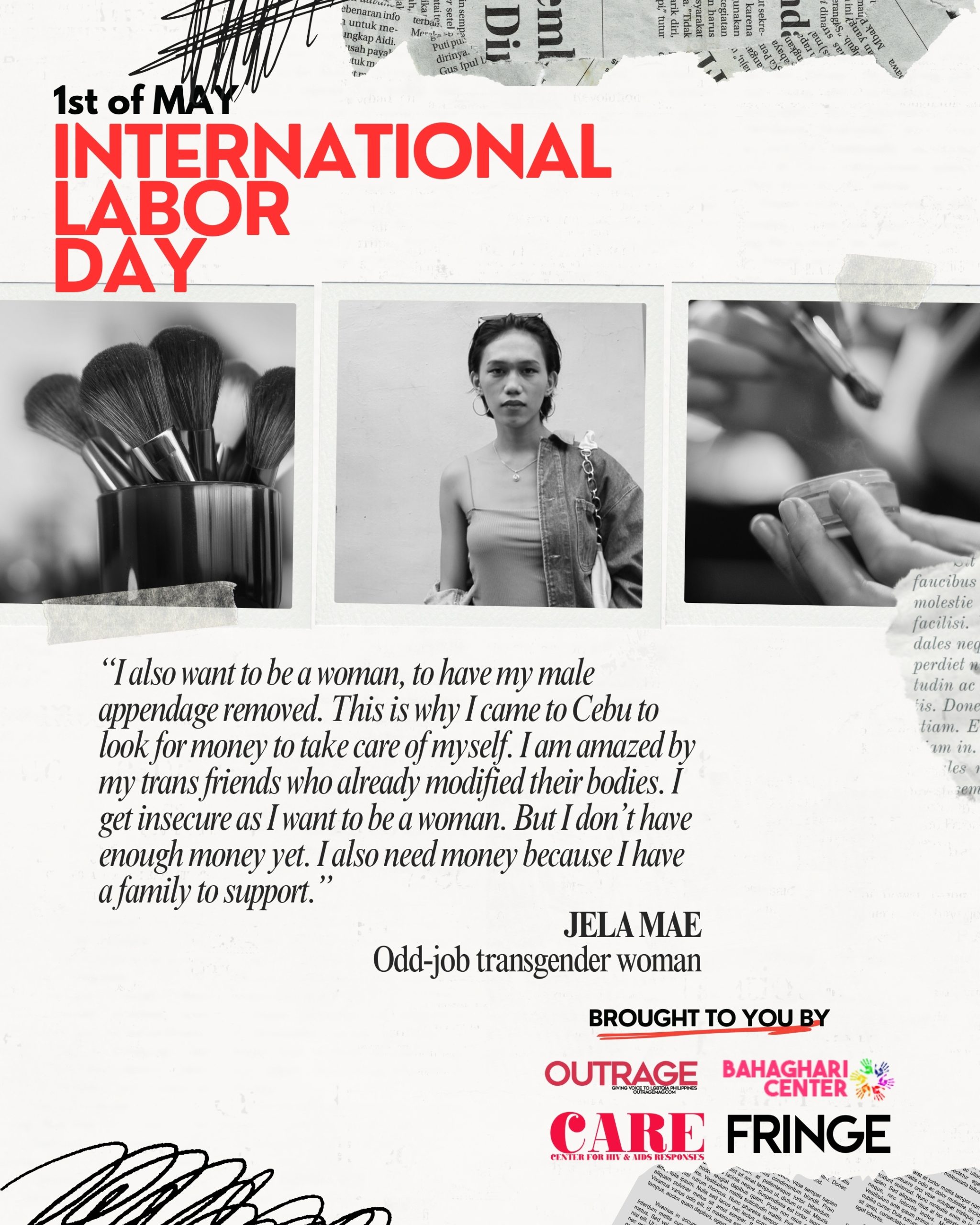
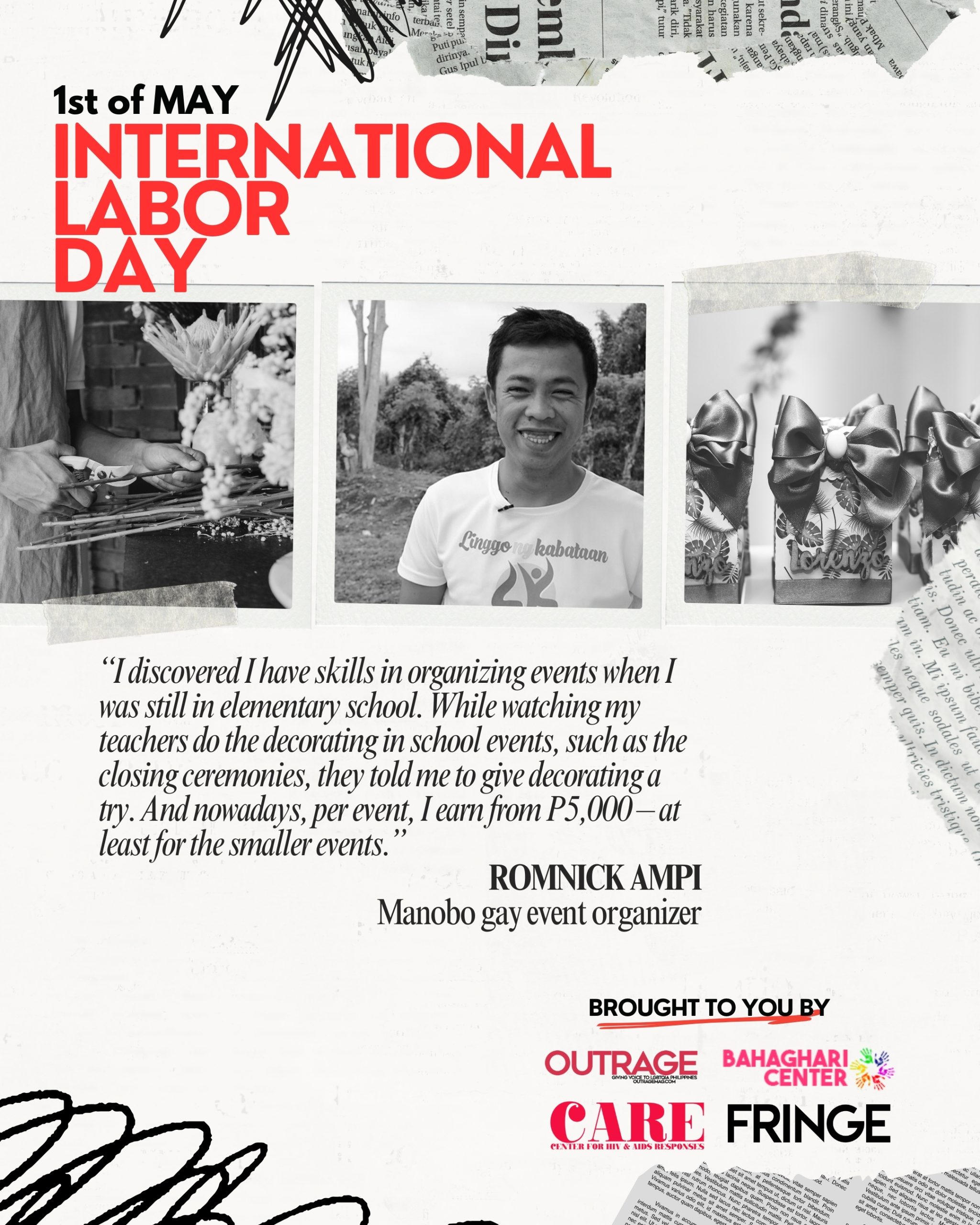
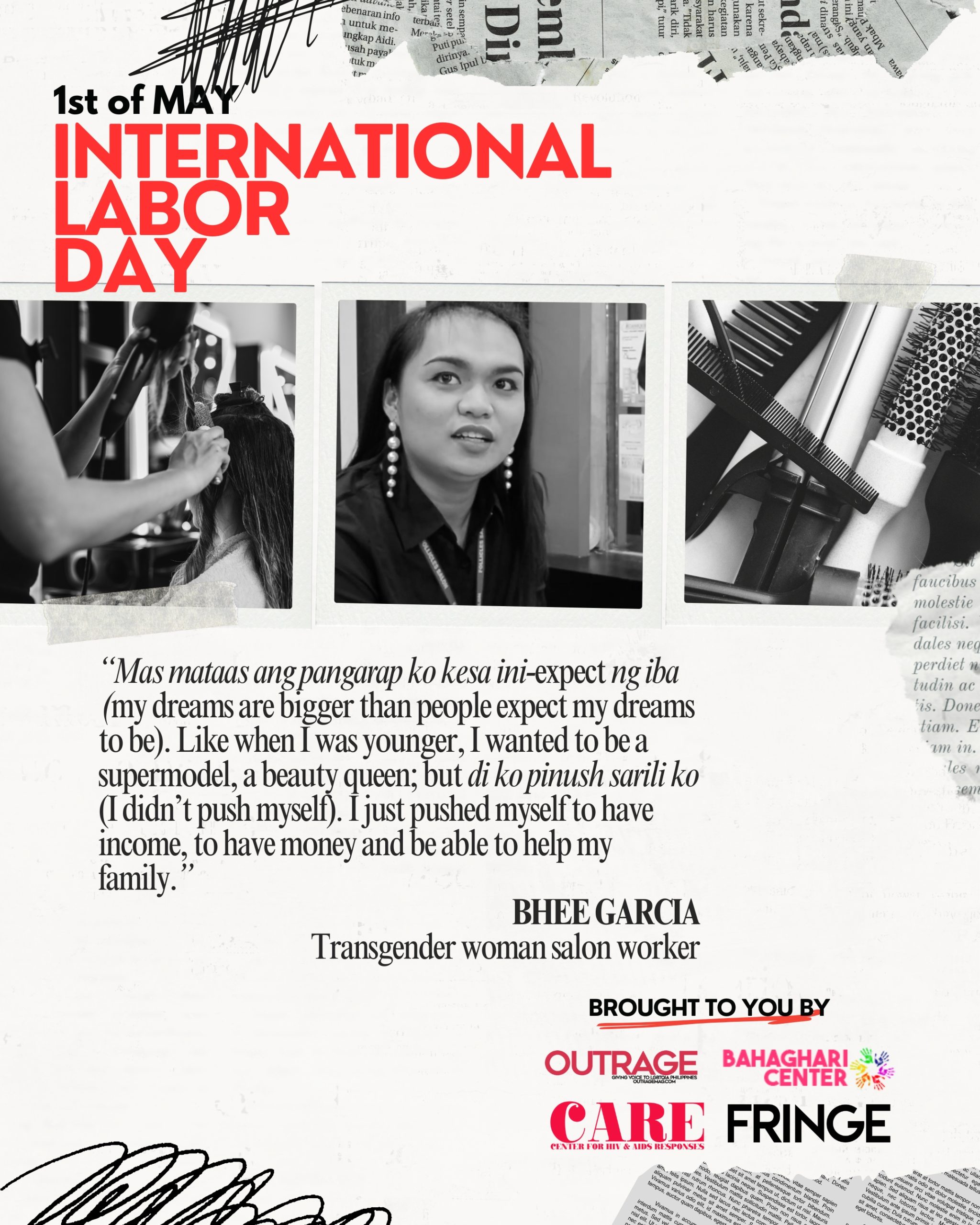
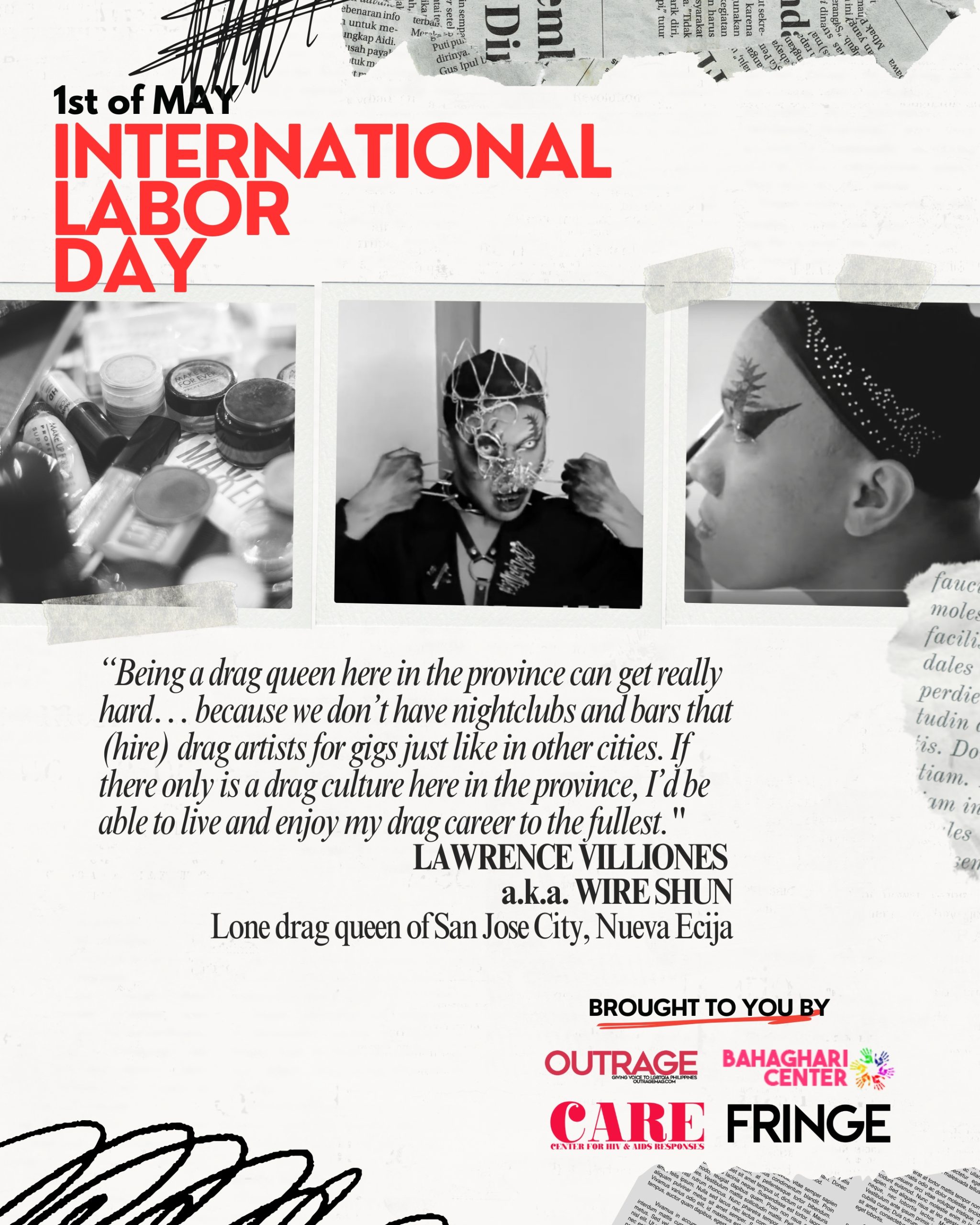
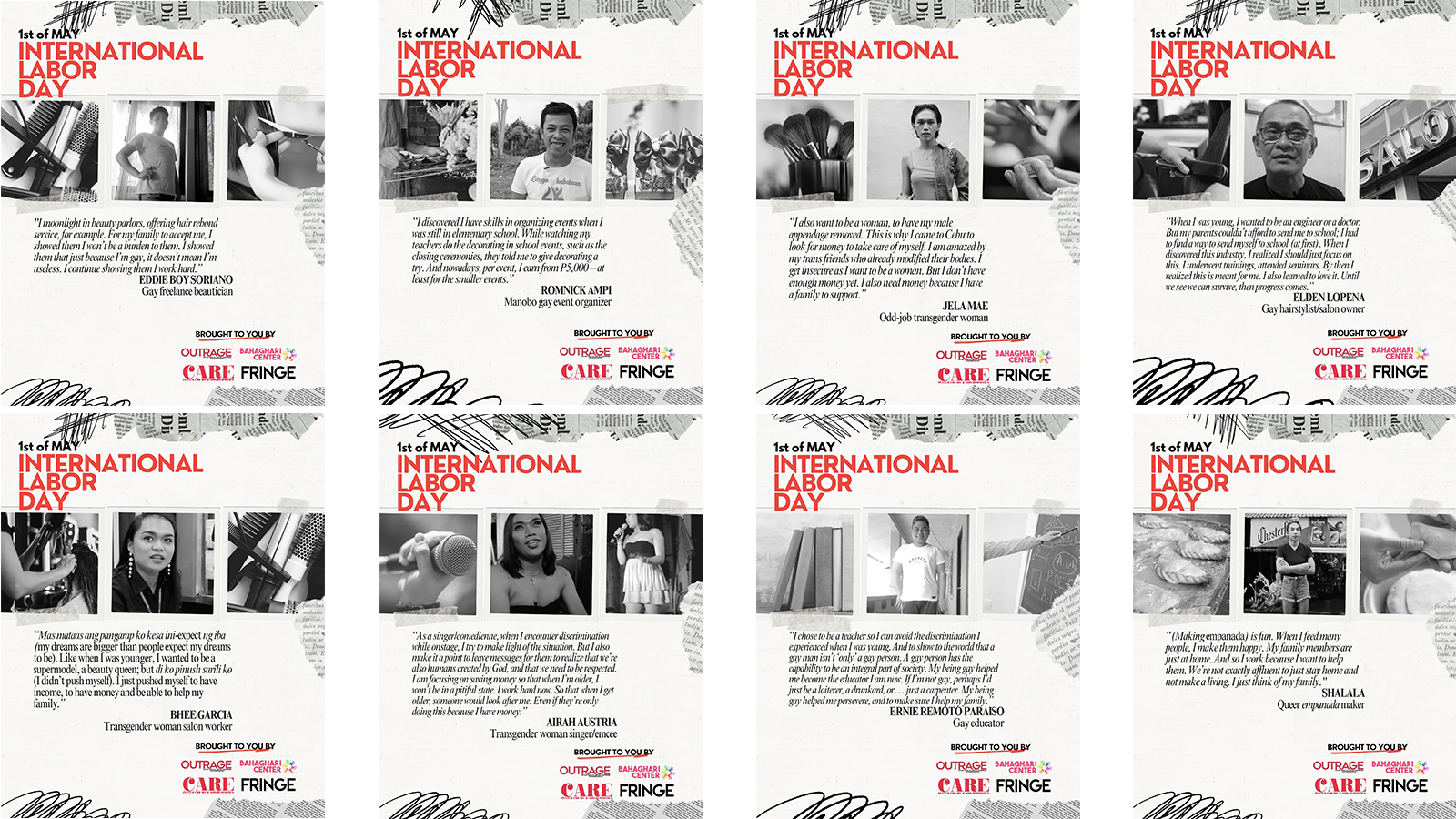
For Michael David C. Tan, MDC, editor in chief of Outrage Magazine, the only publication exclusively for the LGBTQIA+ community in the Philippines, “labor itself is evolving. But no matter the distinctions made among skilled, semiskilled and unskilled workers, the issues of the working class remain. They are still underpaid even if they work longer hours, have no opportunity to professionally prosper, are not regularized (and so do not have access to law-mandated social benefits given to regular workers), have no recourse to complain, et cetera. Society admits we can’t exist without them, and yet fails to actually give them the quality of life they deserve.”
“It is time we also highlight working class LGBTQIA+ Filipinos,” added Bonete, adding that “these are people who are just trying to make a living, from those in the gig economy, to those forced to open micro-businesses because they have been unable to enter the workforce because of their SOGIESC, to skilled professionals who are ‘just’ making a living to look after families (with some even discriminating against the LGBTQIA+ people that now feed them).”
In the Philippines, Araw ng Manggagawa (Labor Day) was first observed in 1903, with the Philippine Assembly passing a bill to officially recognize May 1 as a national holiday in 1908. And yet 117 years later, issues like those encountered by the likes of Claire “continue to be issues, even ‘normalized’ since laws actually allow these practices that benefit the ruling class at the expense of the working class,” Tan said.
“We are – and always have been – everywhere. And exactly because LGBTQIA+ people are part of other minority sectors, like the working class, the LGBTQIA+ movement should be holistic, also pushing for the rights of others also oppressed,” Tan ended.