








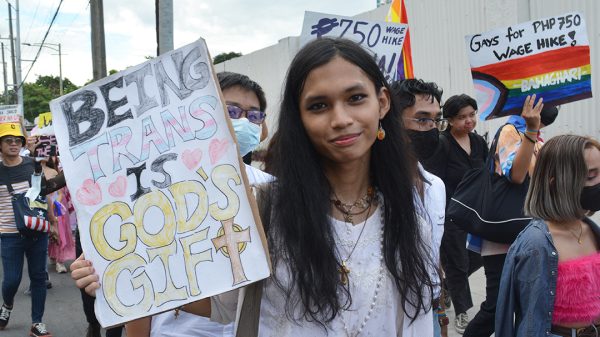






















Health surveys and clinical studies have a data collection problem: Because of the way they record sex or gender, they often exclude transgender and gender-diverse people, according to University of Michigan research.
Most studies and surveys either ask participants for their sex, a biological construct, or their gender, a social construct. In this way, they only consider either sex or gender independently or use the two concepts interchangeably, says Kate Duchowny, a research assistant professor in the Survey Research Center at the U-M Institute for Social Research.
Participants either respond with their sex assigned at birth or the gender they are at the time of the survey, but not both, and this likely excludes transgender and gender-diverse people. This exclusion, Duchowny says, could reduce the accuracy and inclusivity of study and survey results and lead to increased health disparities and a lack of health care for the gender-diverse community.
In a study published in Proceedings of the National Academy of Sciences (PNAS), Duchowny and colleagues analyzed data from UK Biobank, which includes both genetic material and health information from 487,600 individuals in the United Kingdom. The database collects information about each participant’s chromosomal sex as well as their self-reported sex, a proxy the study used for an individual’s current gender.
The researchers found that there were about 200 individuals in the dataset with discordance between their chromosomal and self-reported sex. Further, they were able to pin down the reason for this difference in about 70% of these individuals: Medical records revealed a diagnosis of intersex traits, diagnosis of gender dysphoria and prescriptions indicative of gender-affirming hormone therapies for transgender individuals.
For gender-diverse individuals interacting with health care systems, limited or poorly structured measures regarding sex and gender can pose significant challenges in their ability to access services. Such information is critical to the clinical decision-making for establishing or continuing care, such as when to provide services that are typically considered based on an individual’s sex (e.g. mammograms, pap smears, etc).
“The bottom line is that the study shows, at least for a small proportion of individuals, there is a discordance between their sex and their gender,” said Duchowny, senior author of the study. “Our team’s research shows that because of the way we are currently assessing sex and gender, which has been historically lacking, some folks are not being identified and ultimately are not being cared for in the way in which they deserve. It’s an issue around inclusivity and basic humanity.”
Duchowny says that if researchers are serious about inclusive research that focuses on gender-diverse communities, they must measure both sex and gender.
“That’s what led us down this line of inquiry—really thinking about what are the studies that are actually collecting data on both constructs,” she said. “What we realized is that clinical and health studies are rarely assessing these two constructs accurately and with deliberate distinction.”
The researchers say clinical and health researchers should employ more robust methodologies that identify both the gender and sex of participants to improve the health and well-being of transgender, intersex and nonbinary people. One simple solution would be to employ what’s called a two-step method, which asks participants their current gender as well as their sex assigned at birth.
“These individuals face major barriers and limitations to accessing gender-affirming care as well as general medical services,” Duchowny said. “Based on how the majority of health studies assess sex or gender, the medical and research community isn’t able to get a good handle on who these folks are and how to actually design interventions that are tailored to these groups who have distinct health needs and have been traditionally excluded from health survey research.”
“This study underscores the extent to which our current methods exclude transgender and other gender-diverse communities. It can’t be understated,” she said. “The broader research community will continue to have a large, unethical gap in our research if we do not expand our thinking and think critically about the distinction between sex and gender. By not accurately accounting for these folks, you can’t identify vulnerable groups, and then you can’t target interventions. Ultimately, this becomes an ongoing public health problem.”
Duchowny’s co-authors include Sarah Ackley, Scott Zimmerman and Jae Sevelius of the University of California, San Francisco; Jason Flatt of the University of Nevada; and Alicia Riley of the University of California, Santa Cruz.