





























People with a minority sexual orientation had a higher average impact of endometriosis.
This is according to a study – “Association Between Sexual Orientation and the Impact, Diagnosis, and Treatment of Endometriosis” by Shea E. O’Donnell and Linda Abarbanell – that was published in LGBT Health.
Endometriosis, a chronic, debilitating disease where tissue similar to the lining of the uterus grows outside of the uterus, affects an estimated 1 in 10 people presumed female at birth worldwide. Symptoms, which may include severe pelvic pain; pain with intercourse, bowel movements, and urination; and infertility, can profoundly affect quality of life.
Here, the researchers wanted to examine the association between sexual orientation and the impact, diagnosis, and treatment of endometriosis.
An online survey was conducted in 2023 with 150 adults in the US diagnosed with endometriosis, 119 of whom identified as heterosexual and 31 with a minority sexual orientation. The impact of endometriosis was measured using the Endometriosis Impact Questionnaire (EIQ), consisting of eight subscales. The researchers also assessed factors related to diagnosis and treatment satisfaction, with the data analyzed using independent samples t-tests and multiple linear regression.
Key findings included:
- A greater proportion of heterosexual versus sexual minority participants were currently trying to have children (36.1% vs. 6.5%) and/or wanted children in the future (68.9% vs. 29.0%) versus not (Fisher’s exact p < 0.001). In addition, there was a trend toward a greater proportion of heterosexual versus sexual minority participants having employment of any type versus none (84.0% vs. 67.7%; Fisher’s exact p = 0.07).
- Participants with a minority sexual orientation had a higher average impact of endometriosis on the EIQ physical, psychological, and social subscales than heterosexual participants but a lower impact on the fertility subscale, all with medium effect sizes. They took an average of 5 years longer to be diagnosed, with 83.9% of sexual minority versus 45.4% of heterosexual participants receiving at least one misdiagnosis.
- More sexual minority versus heterosexual participants reported feeling dismissed or disbelieved (96.8% vs. 64.4%), not feeling listened to by providers (96.8% vs. 62.2%), and having difficulty communicating with providers (90.3% vs. 55.5%). The association between sexual orientation and the EIQ physical, psychological, and social subscales could be explained, in particular, by having been misdiagnosed.
- On average, it took 5.0 years longer for sexual minority participants to be diagnosed than heterosexual participants (12.6 years vs. 7.6). They also saw 2.8 more doctors, on average, prior to diagnosis (8.2 vs. 5.4).
- Proportionally more sexual minority participants had received a misdiagnosis (83.9% vs. 45.4%).
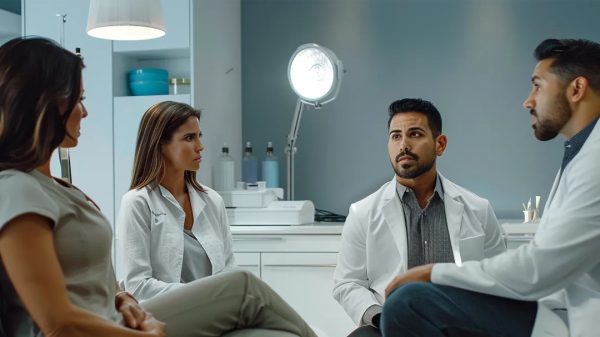
These results “highlight the need for better medical education and inclusive gynecological care to promote timely diagnosis and treatment of endometriosis”, stressed the researchers, adding that “provider biases and discrimination may contribute to a greater impact of endometriosis on sexual minority patients.”
For the researchers, the data support the recommendation of “carefully listening to and looking at patients during exams. Medical education should also include training in cultural and structural competence to help practitioners identify and address potential biases and discrimination, including heteronormative assumptions about intimacy, pain, and fertility concerns.”