





















By Esca Bacordo
When beauty and fashion personalities Ricky Reyes and Renee Salud recently voiced their strong opposition to both same-sex marriage and the SOGIE Equality Bill in a recent Toni Talks video, they did more than just share their personal take—they undermined decades of struggle led by people whose existence is still questioned, criminalized, and erased.
What makes their remarks especially harmful is not just the content, but the context: Reyes and Salud are no stranger to the LGBTQIA+ community. They are not cisgender heterosexual bystanders observing from afar. They are people of diverse SOGIESC who have benefited from the same visibility and spaces that queer activism carved out through protest, policy advocacy, and—in too many cases—bloodshed. That they now choose to speak from a place of comfort and exemption is not just tone-deaf. It’s an unbearable betrayal.
They were able to open doors, enjoy the privilege and pride that came with being embraced by queer culture and community, but then proceeded to close those doors for those who want to exist freely like them. As if to say, “We’ve made it—now stop asking for more.”
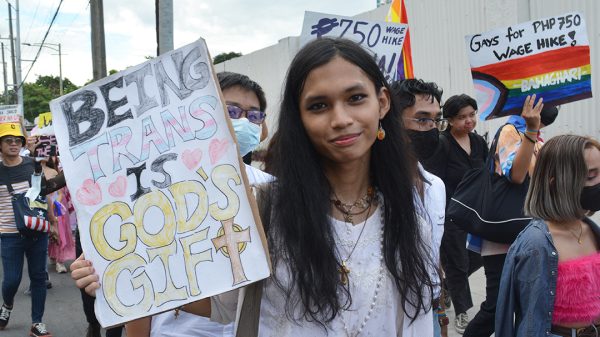
Let’s be clear: the LGBTQIA+ struggle in the Philippines is far from symbolic. We are still living in a country where young queer people are disowned, abused, or driven to silence. Where LGBTQIA+ workers are denied opportunities. Where transgender women are misgendered or worse, murdered, without national protection. The SOGIE Equality Bill is not an accessory—it is urgently necessary. And yet Reyes boasts that he “stopped” it.
That’s not just disappointing. That’s sabotage.
It is easy to say “we just want tolerance, not acceptance” when you have enough **money, legacy, and security to insulate yourself from everyday homophobia. It’s easy to dismiss same-sex marriage when you live without the fear of being evicted from a hospital room where your life partner lies unconscious. It’s convenient to preach “not all gays are entitled” when you’ve long been given a platform while others fight to simply be seen as human.
There’s a term for what we witnessed from Reyes and Salud: “respectability politics.” The belief that if you fit the mold, if you remain complacent—you’ll be allowed to exist. But the queer rights movement was never built on behaving. It was built on resistance. On refusing to conform. And on calling out betrayal—even when it comes from our own.
To those who say “everyone is entitled to an opinion”—yes. But not all opinions are harmless. And when those opinions serve the status quo and harm the marginalized, they should be challenged head-on.
Reyes and Salud are not the first to speak from privilege, and they won’t be the last. But queer people, especially the young, the ones who are afraid to come out, the trans, the poor, deserve better than leaders who ask us to wait, to settle, or to “tone it down.” They deserve a future where legal equality is not debatable, and where survival is not a privilege granted to the palatable few.
Until then, we’ll keep fighting. And to those sitting comfortably behind your gated privilege: maybe it’s time you touch grass and remember who made your comfort possible.