
















Transgender HIV advocate Shola Luna passed away on Tuesday, May 27, leaving behind a showbiz-linked life impacted by HIV, which – as a field of advocacy – she broke into, at first to highlight trans-related HIV issues, and then in her later years, to try to highlight the neglect of senior Filipinos living with the still-incurable disease.
In the HIV community in the Philippines, Shola was considered among the “dragons”, the term used to refer to those who tested HIV positive in the really early days of the HIV pandemic (1980s and 1990s, with the first case of HIV in the Philippines reported in 1984).
And while documentation of HIV history in the Philippines continues to be scanty, Shola is also recognized to be among the first transgender Filipino women to test HIV-positive. She was among the first to publicly come out as HIV-positive LGBTQIA Filipino, and was among the more popular HIV advocates.
TOUCHED BY HIV
When first interviewed by Outrage Magazine in 2013, Shola – the sister of actress Marissa Delgado – said she used to live a glamorous, and somewhat sheltered, life. While working as a make-up artist (albeit as an undocumented immigrant) in Bloomingdale’s in New York in the US in the 1980s, for instance, she “had it all” as a party girl. And although “we knew of HIV and AIDS – though not really”, so that in a way, “guilty rin ako noon (I was also guilty then) of discriminating those who may be HIV-positive; like many, I also believed that when you’re healthy-looking, you’re really okay, so no condoms were used when having sex with them.”
Shola returned to the Philippines to process her documents in 1994; but – on March 18 of that year – when she returned to the US Embassy for her medical clearance, she was informed that her application was nullified because of her HIV status. USA only lifted its HIV-related immigration and travel ban in 2010.
CONFRONTING HIV
It took Shola some time to accept that she’s HIV-positive, she admitted to Outrage Magazine; so she had to get sick from opportunistic infections (OIs) before she sought help. And on the very first day she went to the Research Institute for Tropical Medicine-AIDS Research Group (RITM-ARG), she was immediately confined.
At that time, “wala pang gamot; ginagamot lang ang OIs (treatment was not yet available; doctors just treat the OIs).” And so she became a regular of RITM for a year, “labas-pasok sa RITM kung may naramdaman (in and out of RITM when something was wrong with me).”
At that time, antiretroviral medicines (ARVs) were not yet widely available. So she agreed to be part of HIV treatment trials, even if – she said – “we didn’t know how things would turn out.” In the end, “I think we (PLHIVs at that time) all wanted to live longer, so we said yes (to the trials).”
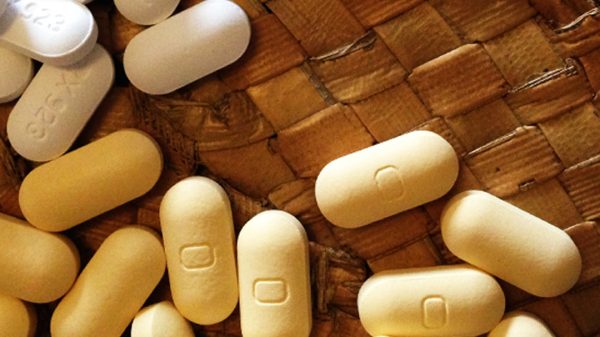
She started her antiretroviral therapy in 1998, taking from 15-30 tablets in the morning, and another 15-30 tablets at night.
But Shola was also stigmatized – e.g. her family didn’t know enough at that time to comfortably engage with her. And so, when Shola became a staunch HIV advocate, she focused on the needs of transgender people related to HIV, as well as stigma and discrimination reduction.
AGING WITH HIV
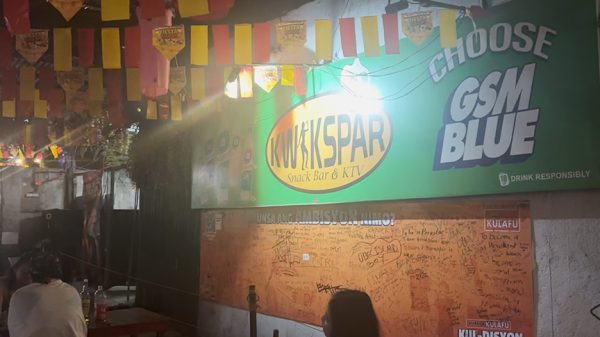
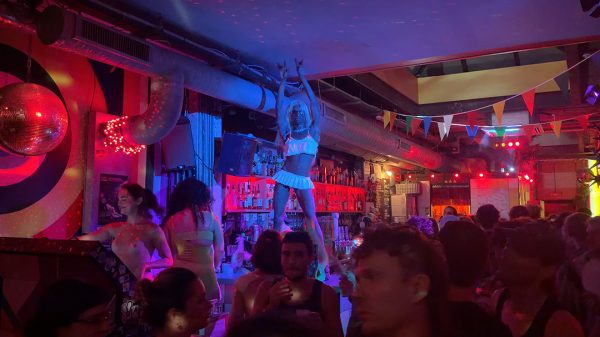
Shola was a known “party girl” and “nightlife legend”, also working as a drag performer, make-up artist, and even occasionally appearing in films.
In her last years, Shola lamented the neglect of those who are aging while living with HIV.
“(Service providers) should give importance to seniors who are also living with HIV,” she said to Outrage Magazine in her last interview, “because we have various needs (very specific to us).”
For instance, “we’re not as strong as we once were. (This has an effect on us) making a living, so that being provided with livelihood (could also help).”
Age-related and HIV-related illnesses limited Shola’s mobility in her later years, though HIV advocacy in the Philippines also changed, and not necessarily for the good of aging HIV advocates like Shola who was sidelined by better funded and well-connected younger HIV workers. Her last media appearance happened in 2021.
But Shola’s message was always to see the positive in being HIV-positive. “You know what, being HIV positive is not the end of the world for us who are HIV positive. Instead, it is but the beginning of a beautiful, positive life.”