








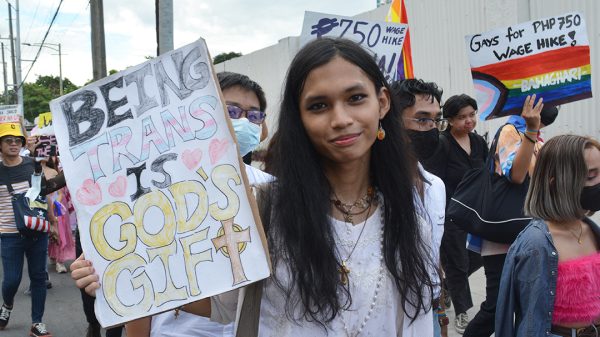










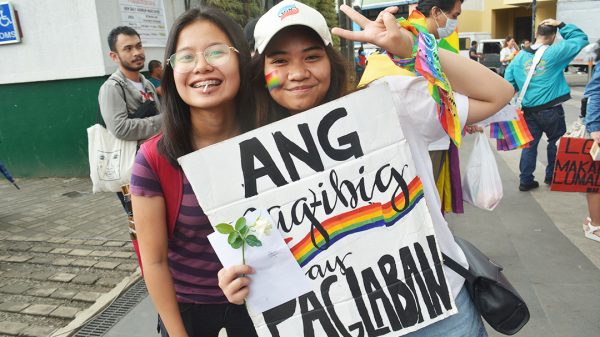











John, a 16-year-old high school student who identifies as transgender, comes home after an unfortunately common experience—ridicule from his classmates. In his bedroom, John reaches for his vape to alleviate stress. John is one of the estimated 1.63 million middle and high school students in the US who currently use e-cigarettes, commonly known as vapes. Youth who identify as sexual and gender minorities (lesbian, gay, bisexual, transgender, queer, collectively LGBTQ+) vape at higher rates than non-LGBTQ+ youth, according to existing research, and are therefore at greater risk of associated negative health outcomes.
What places LGBTQ+ youth at greater risk than their non-LGBTQ+ peers?
It is not sexual or gender identity itself, according to a study led by George Mason University PhD in public health student Omolayo Anjorin. Rather, Anjorin’s research reveals that it is social and community factors that make LGBTQ+ youth more vulnerable to e-cigarette use.
“The stigma and discrimination associated with identifying as a sexual or gender minority elevates psychological distress and contributes to negative coping behaviors like vaping,” said Anjorin.
LGBTQ+ youth experience higher rates of bullying, rejection, and violence. LGBTQ+ youth are also often minorities in their households among family, which can be a source of conflict. The feelings of isolation and rejection contribute to substance use as a way of coping.
Anjorin also notes that in some LGBTQ+ social environments where vaping has become more normalized, some youth may take up the behavior as one way to feel a sense of belonging or acceptance, particularly when they have been pushed out of other social spaces.
Vaping, much like smoking tobacco, can damage cardiovascular and respiratory health, impair immune function, create nicotine dependence, and lead to use of other substances.
What can be done? There are pathways to prevention.
The study included how LGBTQ+ youth can be protected from the harms of vaping:
- Family support of their identities.
- LGBTQ+ organizations that promote anti-substance use in community spaces.
- Inclusive school activities, such as gay-straight alliance clubs.
- Access to gender affirming health care.
“Effective prevention requires moving beyond universal approaches, toward targeted interventions that address the underlying factors specifically affecting LGBTQ+ youth,” said Anjorin.
Professors Kenneth Griffin and Rima Nakkash in the College of Public Health co-authored the paper. Nakkash served as the principal investigator. Other authors include Anahita Asghari-Kamrani, research assistant and George Mason MPH alum assistant; CJ Mandell, project coordinator and George Mason MPH alum; and Lisa Lindley, co-investigator from Lehigh University
“By identifying unique risk and protective factors for vaping among LGBTQ+ youth, and the mechanisms by which they increase risk, the findings will help the successful adaptation of evidence-based preventive interventions to reduce vaping in this vulnerable group,” said Griffin, the project’s lead and chief author.
Multi-level Risk and Protective Factors for Vaping Onset and Escalation Among Youth: A Focus on LGBTQ + Disparities was published in March 2026 in the scientific journal Prevention Science.