




























Cambodia packs three very different travel experiences into a country roughly the size of Missouri: the temple complexes around Siem Reap, the dense urban history of Phnom Penh, and the beach towns and islands off Sihanoukville and Kep. The trouble is that most first-time visitors either spend all their time at Angkor and skip the rest, or try to cram everything into five days and end up exhausted on a boat to Koh Rong. Getting the balance right comes down to understanding the geography and being honest about how much time each region deserves.
Mapping the Route: Siem Reap to Phnom Penh to the Coast
The natural flow for this trip runs north to south. Start in Siem Reap for Angkor, move southeast to Phnom Penh for a couple of days of history and city life, then continue south to the coast for the last stretch. This avoids backtracking and follows the country’s main road and flight corridors, which makes logistics far simpler than trying to loop back and forth.
Reversing the order works too, especially if flights land you in Phnom Penh first. What matters is picking one direction and sticking to it rather than zigzagging, since domestic travel here still takes longer than the map distances suggest.
How Long You Actually Need in Each Place
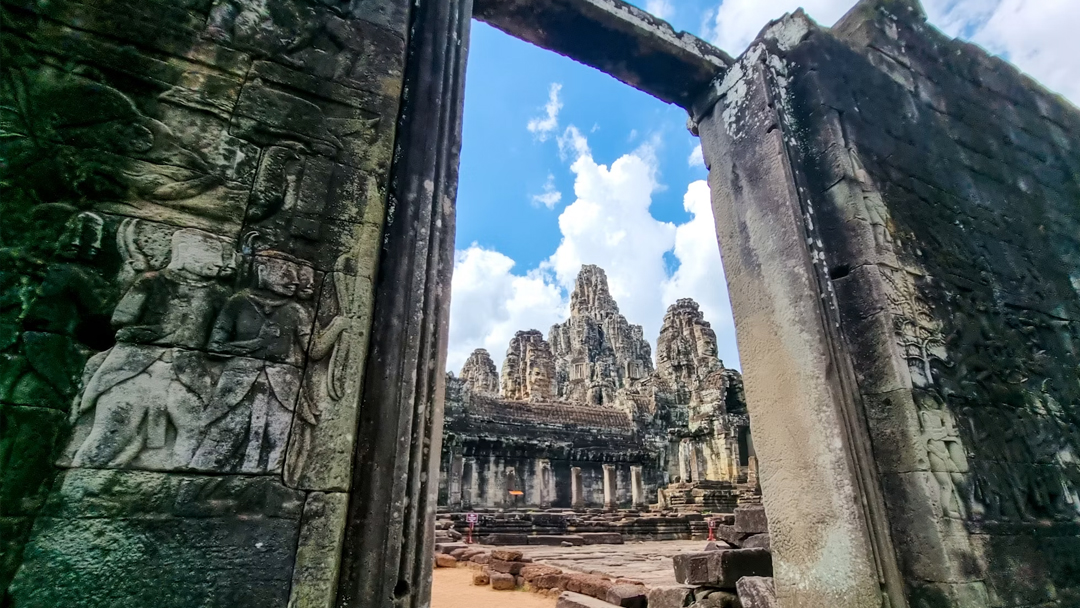
Angkor deserves at least three full days. The complex spans more than 400 square kilometers, and rushing through Angkor Wat, Bayon, and Ta Prohm in a single day leaves out places like Banteay Srei or Beng Mealea that reward the extra effort. Two days is workable if time is tight, but three lets you avoid the worst midday heat by splitting visits between early morning and late afternoon.
Phnom Penh needs less time but shouldn’t be skipped. Two days covers the Royal Palace, the National Museum, and the Tuol Sleng and Choeung Ek sites, which together explain the more difficult chapters of Cambodia’s twentieth century. Many travelers underestimate how emotionally heavy a proper visit to the Khmer Rouge sites can be, so building in a slower afternoon afterward is worth planning for.
The coast is where the itinerary can flex. Three to five days is a reasonable range depending on whether the plan involves island time, diving, or just a couple of relaxed beach days before flying home.
Getting Between the Three Regions
Domestic flights connect Siem Reap, Phnom Penh, and Sihanoukville, and they’re the fastest option if time is limited. A flight from Siem Reap to Phnom Penh takes about an hour, compared to a six-hour bus ride on roads that vary in quality.
Buses remain the budget-friendly choice and are more comfortable than they used to be, with several companies running air-conditioned coaches between the major cities. For travelers who want a more scenic option, private car transfers with a driver are common and let you stop at towns like Kampong Thom or Kampong Cham along the way.
Getting to the coast from Phnom Penh is straightforward by road, taking around four hours to Sihanoukville or Kep. From there, boats run regularly to Koh Rong and Koh Rong Samloem for those adding island time.
Building a Realistic Itinerary
A 10-day trip fits this route comfortably: three days in Siem Reap, two in Phnom Penh, and four or five on the coast, with a day built in for travel between each leg. Fourteen days allows for a slower pace throughout and room for a side trip to somewhere like Battambang or an extra island.
Trying to do this in seven days or less usually means cutting Angkor down to one rushed day, which defeats the purpose of visiting in the first place. If time is genuinely short, it’s often better to choose two of the three regions and do them properly rather than skim all three.
Several operators now put together luxury Cambodia tours that handle these transitions for you, pairing boutique stays in Siem Reap with beachfront resorts in Kep or Song Saa, which takes the guesswork out of timing flights and transfers while still allowing a flexible pace at each stop.
Where to Base Yourself on the Coast
Sihanoukville itself has become fairly built up and isn’t the relaxed beach town it once was, so many travelers now base themselves in Kep instead, a quieter town known for its crab market and colonial-era ruins. Otres Beach, just outside Sihanoukville, offers a calmer alternative with a growing number of small guesthouses and restaurants.
For island time, Koh Rong Samloem tends to be quieter than Koh Rong, which has developed a livelier backpacker scene. Both are reachable by speedboat from the mainland in under an hour.
Practical Timing and Booking Tips
Book Angkor entry passes in advance during peak season, which runs from November through February when temperatures are cooler and rainfall is minimal. The wet season, from June to October, brings dramatic afternoon storms but also thinner crowds and lush green temple grounds, which some photographers actually prefer.
Domestic flights within Cambodia sell out during holiday periods like Khmer New Year in April, so booking those legs early is worth the effort even if the rest of the trip stays flexible.
The real key to fitting Angkor, Phnom Penh, and the coast into one trip isn’t finding more days, it’s resisting the urge to see everything. Pick a realistic pace for each region, build in travel buffer days, and let one or two places go deeper rather than trying to touch all of them equally.