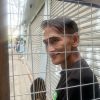





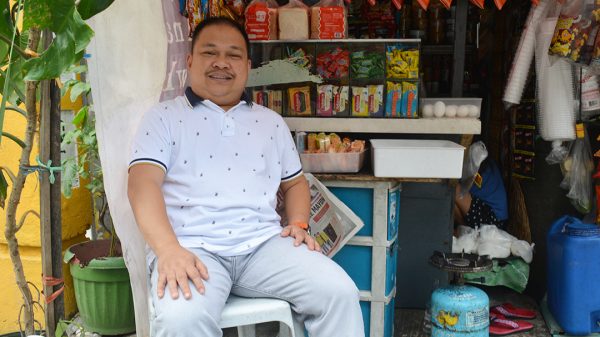


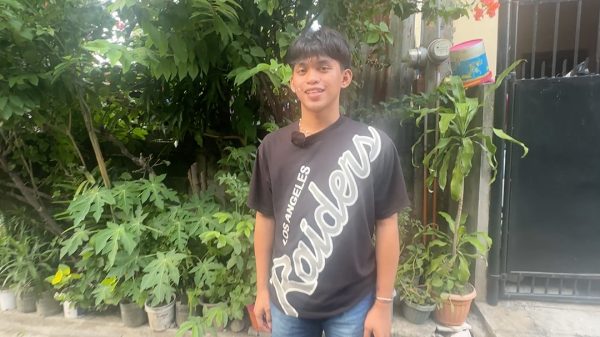







Sean Patrick Dumpa, a 28-year-old Deaf gay man from Cavite City, tested HIV-positive in 2023. Then, and now, he said that dealing with HIV is a never-ending challenge for people like himself. Deaf-specific HIV materials are hard to come by, there are no HIV-specialized Filipino Sign Language (or FSL) interpreters, and existing service providers are unfamiliar with the Deaf culture and with FSL.
“If there is no interpreter or no FSL support is given, miscommunication can happen,” Sean said, adding that while writing can be done to communicate, “but sometimes I don’t understand (what’s written).”
This confusion was among the reasons that led to Sean stopping using his antiretroviral medicines for approximately a year… at least until he got so sick he was forced to restart taking ARVs again.
“I decided to stop (taking ARVs) because I was not happy, and I had depression. I didn’t have support from anyone,” he said.
Interestingly, there is actually a local law that mandates providing Deaf-specific support in accessing health care. Republic Act No. 11106, or the “Filipino Sign Language Act (FSL Act)”, tasks the Department of Health (DOH) to ensure accessible and barrier-free health services, including those for sexual and reproductive health, as well as HIV and AIDS, by using FSL and providing trained personnel.
The lament, therefore, is the continuing lack of these.
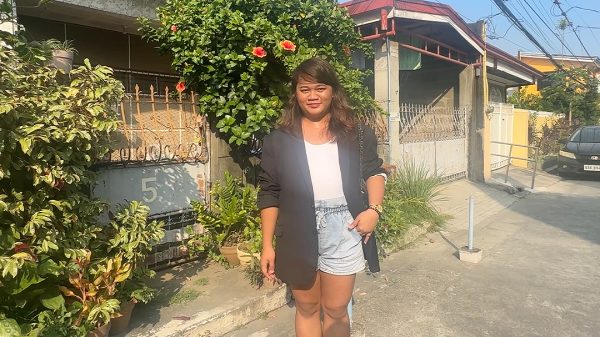
According to Mx Disney Aguila, co-executive director of Bahaghari Center for SOGIE Research, Education and Advocacy, Inc. (Bahaghari Center): “What’s lacking from what’s offered by the government and NGOs? Number one is the lack of interpreters. Number two is (the lack of use of) FSL. And number 3 is (lack of) Deaf-specific services.”
For Disney, these are challenges because there is a law, the “FSL Act”, or R.A. 11106, that “stipulates that facilities should provide FSL so Deaf people can access them. Public hospitals should have FSL interpreters. (In fact) whether it’s public or private, hospitals should have FSL interpreters. But I think that, now, some public hospitals still don’t (use) FSL or sign language in their communications.”
The HIV prevalence rate among Deaf is said to reach 4%, which is not dissimilar to the prevalence rate in the general population. And yet misconceptions abound that asexualize, infantilize or desexualize Deaf people, neglecting that they also engage in risky sexual practices like having multiple sexual partners (30.9% vs 10.1%); as well as lower condom use particularly among Deaf women (46.0% vs 58.1%), lower-income Deaf (44.4% vs 69.7%) and less educated Deaf (31.3% vs 57.7%) people than among those from general population groups.
Their risk, it has to be stressed, is due to the lack of, if not complete absence of responses to Deaf-specific challenges, from inaccessible mass media (radio/TV), lack of sign-language-based information, and providers often lacking cultural sensitivity.
“Mostly, Deaf people get tested for HIV in Manila or NCR (National Capital Region). It is easy to get HIV test here (since) there’s easy access. But how about those in Visayas and Mindanao? For them, it is difficult,” Disney said.
Disney added that some Deaf people go to public hospitals run by the government. “But at times it is difficult to communicate and (use) writing (as a way to communicate). Why? Because Deaf people do not know some words related to HIV testing, or questions to ask counselors.”
Sean is open about his HIV status, and he is fortunate his family has been supportive of him. But he knows this isn’t true for everyone. So for him, the push should be in Deaf people having access to testing, and if someone tested HIV-positive, access to Deaf-sensitive care and support.
“Why do you need HIV testing? To know your HIV status, so you remain safe, and for you to live and not die,” Sean said.
For Disney, both the government and civil society should do better.
“Hey, government: I appreciate that there is a law tackling HIV. But remember that there is also a law for the Deaf: RA 11106 or the ‘FSL Act’. It stipulates the use of FSL or hiring of FSL interpreters or possible development of Deaf services. What’s important is inclusivity, so more accessibility for the Deaf,” Disney said.
And in the end, unless necessary steps are taken to make HIV services truly inclusive, then certain populations – like the Deaf community – will continue to be left behind.
This is part of “More than a Number”, which Outrage Magazine launched on March 1, 2013 to give a human face to those infected and affected by the Human Immunodeficiency Virus (HIV) and Acquired Immunodeficiency Syndrome (AIDS) in the Philippines, what it considers as “an attempt to tell the stories of those whose lives have been touched by HIV and AIDS”.
More information about (or – for that matter – to be included in) “More than a Number”, email editor@outragemag.com, or call (+63) 9287854244 and (+63) 9157972229.